If you have ever ordered manual call point protective covers only to find they do not fit your on‑site fire alarm units, you already know how frustrating that mistake can be. It happens far more often than most people would guess. Many procurement teams and installers grab a cover based only on photos or rough descriptions, then get stuck with parts that cannot mount properly. No one wants to waste budget, hold up site work, or send goods back across international borders. Have you wondered exactly what dimensions you really need to record before placing your order?
You know what? A protective cover looks simple on the surface, yet three key measurements decide whether it fits. You must get width, height, and projection depth of your existing manual call point. Skip even one of those numbers, and your new cover might not close, might press against the alarm button, or could fail to sit flush against the wall. That sounds small, but it creates real‑world headaches for commercial building projects.
What Do Those Three Key Measurements Actually Mean?
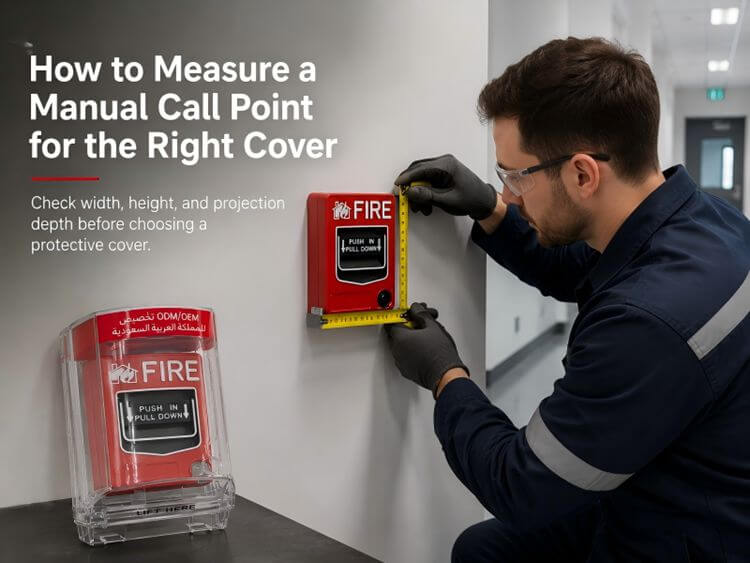
Let’s break each dimension down in plain terms. You do not need fancy lab gear; a standard tape measure works perfectly for site checks.
- Width: This is the horizontal size across the face of your installed manual call point, left edge to right edge. Do not measure only the inner trigger section. Measure the full outer housing of the red fire alarm unit mounted to the wall.
- Height: This runs vertically, top edge down to bottom edge of the complete call point body. Again, stick to the full outer casing, not just the push‑pull operating window.
- Projection depth: This one trips up lots of installers. Projection means how far the whole unit sticks out from the wall surface. Put simply, it is the distance from the flat wall to the furthest‑out point on your fire alarm call point. Many buyers forget this number entirely. If your cover’s inner depth is too shallow, it will press on the alarm and trigger false fire signals. Can you imagine rolling up to a job site and discovering your brand‑new covers set off false alarms? That scenario plays out more than you would think.
Some manual call points sit almost flat. Others stick further outward because of internal hardware or lock mechanisms. Even two call points that look similar can have very different projection depths. That is why you cannot rely on memory or generic product pictures. Get the tape out and take real numbers on location.
Step‑by‑Step: How You Should Take Measurements On‑Site
Here is a straightforward workflow for technicians or procurement staff visiting project sites.
First, confirm the manual call point sits properly mounted on its wall base. Loose or tilted units will give wrong readings. Next, grab your measuring tape. For width and height, hold the tape straight across the outer housing. Write those values down in millimetres; most fire hardware suppliers work with mm units.
Then measure projection depth. Place one end of your tape flat against the wall surface. Extend it out until it touches the furthest‑forward part of the call point outer shell. Jot that reading down right away. Do not guess it.
Quick tip: Take two separate readings for every dimension. Measure once, pull the tape away, then measure a second time. Human slip‑ups happen; double checking cuts down simple errors. If you have multiple call‑point models on one large project, measure each different unit type. All call points are not built to identical dimensions, even when they come from one brand.
You also want to note small extra details. Does your unit feature an external lock? Are there raised screw heads or protruding indicator lights on its face? These little bumps can eat up space inside your protective cover. If you miss these features, your otherwise‑correct‑size cover still may not seat correctly.
Why Wrong‑Sized Covers Cause More Trouble Than You Expect
A poorly‑fitted protective cover is not just a cosmetic annoyance. It brings real operational risks for your fire safety setup.
If the cover is too tight on projection depth, internal parts push against the manual call point trigger. That can create random false fire alarms. False alarms waste response resources and erode trust among building occupants. On the flip side, a cover that is far too big will rattle, shift, and may not offer reliable protection against accidental knocks, dust or water splashes. Remember, many sites select these covers to hit IP67 ratings for corridors, public zones, or outdoor sheltered spots. The full water‑dust protection only works when the cover sits properly closed and mounted.
We have talked with overseas buyers who ordered batches of mis‑matched covers for large commercial builds. They faced shipping delays, extra freight costs for returns, and project timelines slipped by weeks. Cross‑border orders cannot be swapped out overnight. Spending five minutes measuring on‑site beats dealing with costly reverse logistics. That small bit of field work saves you so much hassle later.
Custom Cover Options For Special Project Requirements
Many regions, Saudi Arabia for example, have local marking and labelling demands for fire safety hardware. You might need printed text in Arabic, custom logos, or special ODM / OEM tweaks for your tender project. When you request custom printed protective covers, your accurate dimension set becomes even more critical. Custom‑made parts cannot get exchanged quickly.
Shenzhen Sumring Technology Co., Ltd., founded back in 2014, manufactures the SR‑A08‑PS transparent IP67 manual call point protective cover. They hold over 15 years working experience within fire and security hardware. Their product range spans smoke detectors, gas detectors, carbon monoxide alarms, complete fire alarm systems and manual call point protective housings. They serve importers, system integrators and construction contractors across dozens of global markets. Their SR‑A08‑PS model fits a wide selection of common manual call point sizes, and they support custom print jobs for regional project needs.
Even with flexible custom manufacturing, they still ask customers to supply those three core dimension values: width, height, projection depth. No factory can reliably design or suggest matching covers without those figures. It does not matter how experienced your hardware vendor is. Accurate measurements from your physical on‑site unit remain the starting point.
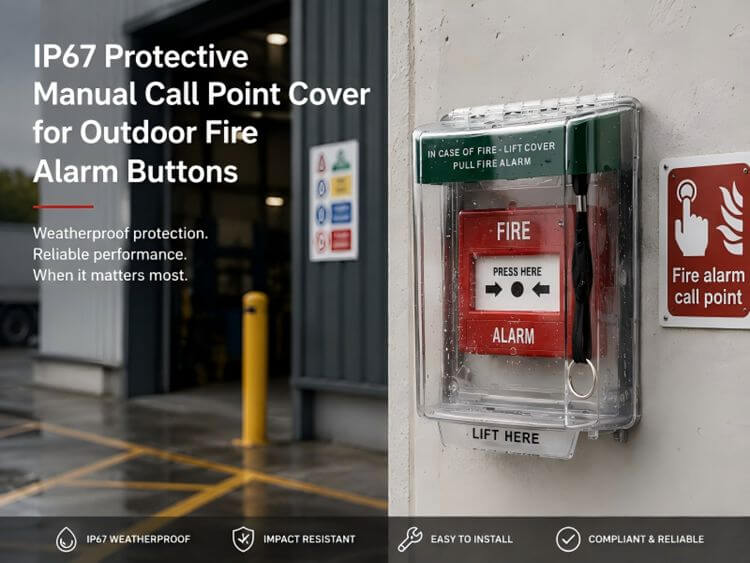
Quick Do’s and Don’ts For Sourcing Manual Call Point Protective Covers
Do
- Record width, height and projection depth for every distinct manual call point model at your site
- Use millimetres for all your measurement notes
- Double‑check each dimension two times
- Note any raised locks, lights or protruding components on the call‑point face
- Share your full dimension list with your hardware supplier before sample or bulk orders
Don’t
- Pick cover size purely from product photos
- Skip measuring projection depth; this is the most frequently forgotten value
- Assume all manual call points share identical outer dimensions
- Order large bulk quantities before confirming fit with a sample unit when working with new‑to‑you hardware
Real‑World Scenario: Saudi Arabia Project Case
One of Sumring’s overseas clients rolled out manual call point protective covers for multiple commercial corridors across Saudi Arabia. The project needed custom Arabic text printing on top of the transparent IP67 housings. Before production kicked off, the customer sent over full width, height and projection depth measurements taken directly from their already‑installed manual call points. Those exact numbers allowed the factory to confirm SR‑A08‑PS would work for their hardware. Samples shipped out, fit got verified locally, and mass production moved forward without unexpected issues.
Think for a second how this could have gone wrong. If they had skipped on‑site measurements and relied only on general descriptions, whole pallets of custom‑printed units would not fit their installed fire alarm hardware. When custom printing is part of your order, you cannot repurpose mis‑sized stock for other jobs. That is a huge financial risk you want to steer clear of.
FAQ
Q1: Can I pick a manual call point protective cover without measuring projection depth? A1: It is strongly discouraged. Projection depth tells you how far your alarm unit sticks out of the wall. Without that reading, your protective cover may press against the trigger and trigger unwanted false fire alarms. Always capture this value.
Q2: What measuring tool works best for getting these dimensions? A2: A simple standard tape measure works fine for site technicians. Record your values in millimetres, most fire hardware suppliers use mm specifications for their product drawings.
Q3: Does Sumring offer custom printed manual call point protective covers for regional market projects? A3: Yes. The SR‑A08‑PS IP67 protective cover supports ODM and OEM custom printing. Customers still need to supply width, height and projection depth for their existing manual call points before samples or bulk manufacturing start.
Q4: Will one protective cover model fit every brand of manual call point? A4: No. Outer casing sizes vary widely across manufacturers. Always cross‑reference your measured dimensions against the cover’s internal dimensions before ordering.
Q5: What risks pop up if my manual call point cover fits poorly? A5: Poor fit can lead to false fire alarms, reduced dust and water protection, loose mounting, and extra project costs from product returns and shipping delays.
If you are sourcing manual call point protective covers for your next commercial tender or build project and need dimension check guidance, sample availability, custom printing options or bulk pricing, reach out to Sumring. Established in 2014 in Shenzhen, our fire‑security team reviews dimension data, shares product drawings, and supports custom ODM / OEM requests for global buyers. Send your inquiry over today.
Latest posts
-
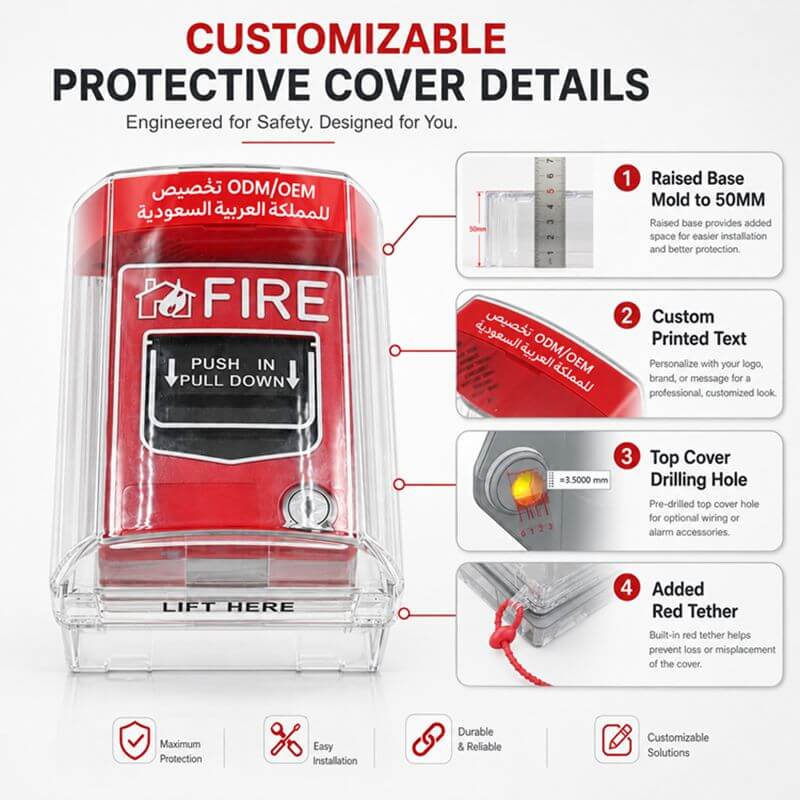 Protective Cover SR‑A08‑PS: Real Saudi Arabia OEM Custom Project From Sumring
Do you like ?0
Read more -
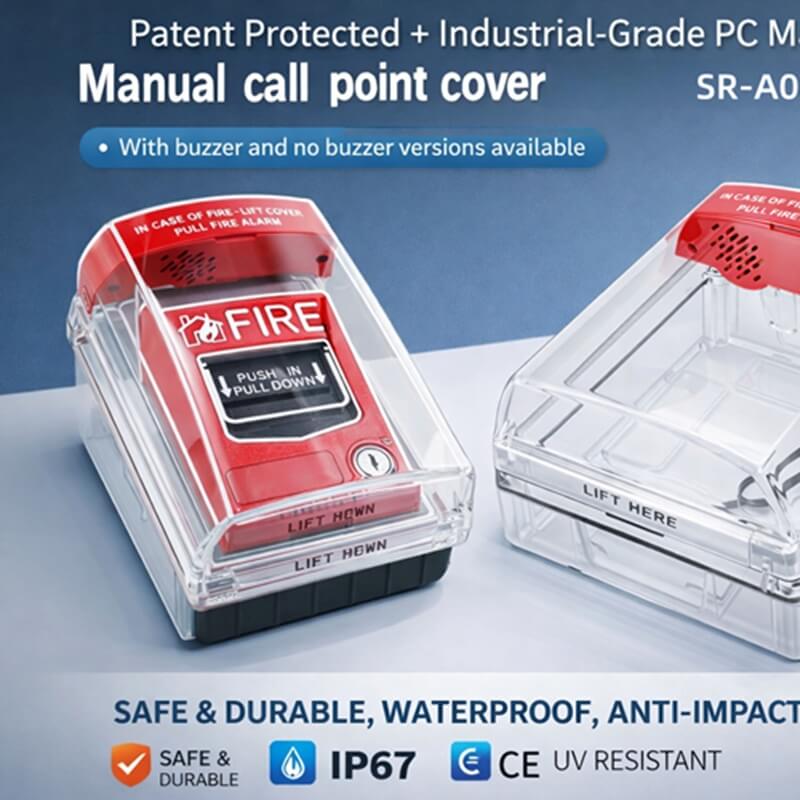 What’s the Manual Call Point Cover Made Of? Let’s Talk Industrial-Grade PC Mater
Do you like ?0
Read more -
 What Are Transparent Protective Covers for Manual Call Points?
Do you like ?0
Read more -
 how about fire alarm pull station cover with horn ?
Do you like ?0
Read more -
 How important is a manual call point cover in a fire alarm system?
Do you like ?0
Read more -
 Should fire alarms have covers?
Do you like ?0
Read more
Search
Hot Product