Is this gas detector suitable for home kitchens? A Complete Buying Breakdown
Opening Thought – Why This Question Dominates Every Buyer’s Inbox
If you work with global safety hardware wholesale, especially across South America, Europe, and Southeast Asia, you’ve definitely received the same question hundreds of times: is this gas detector suitable for home kitchens?
It’s a common scenario. You receive industrial gas detector samples from manufacturers with tough metal casings and advanced technical specs, only to get asked by your retail clients if the device works for regular household cooking spaces. The confusion is totally understandable — but mixing industrial detectors with residential kitchen applications is one of the most common and costly mistakes gas alarm buyers make.
Here’s the simple truth: kitchen environments are humid, greasy, and full of everyday chemical fumes that industrial sensors are not designed to handle. Generic gas detectors either trigger endless false alarms or fail prematurely when installed inside home kitchens. So how do you quickly tell which models are truly kitchen-safe? Let’s break down everything you need to know as a professional wholesale buyer.
Kitchen Air Is Nothing Like Factory Air
You might not realize how harsh a typical kitchen environment really is for sensitive gas sensors. Every single day, kitchen detectors face constant interference that industrial devices never encounter. Boiling water creates heavy humidity and condensation. Frying food builds up fine grease particles that slowly block sensor openings. Household sprays, cleaning alcohol, air fresheners, and candle fumes float through the air nonstop. Temperatures rise sharply during cooking hours and drop dramatically at night, while exhaust fans create unstable airflow.
Industrial gas detectors are calibrated for stable, clean, controlled indoor factory conditions. When placed in a real kitchen, they struggle to distinguish actual gas leaks from normal household fumes. That is why only certified residential gas detectors with anti-grease and anti-interference design should be used for kitchen safety projects.
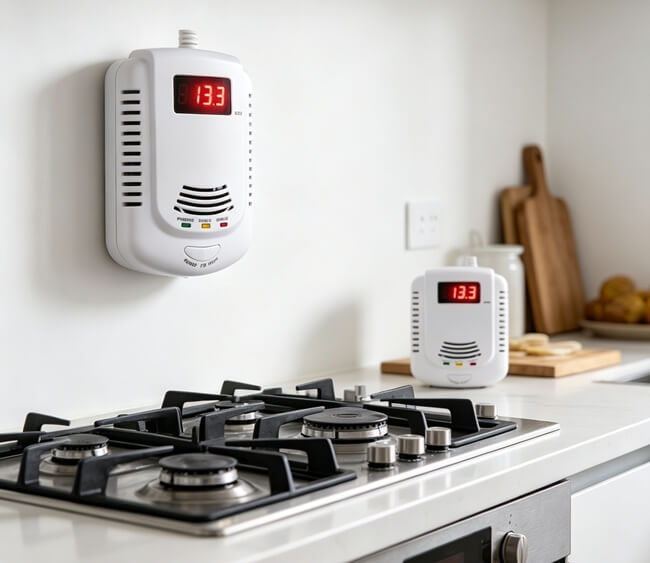
Core Specs That Prove a Detector Works for Home Kitchens
1. Accurate Household Gas Detection Range
Home kitchens only require detection for two common fuel gases: methane (natural gas) and LPG (propane and butane). Reliable kitchen gas detectors trigger alarms at standard residential thresholds: 10% LEL for methane and 15% LEL for LPG.
Industrial multi-gas detectors detect dozens of industrial chemicals, which sounds impressive but causes unnecessary false alarms in kitchens. For residential use, single-gas targeted detection is far more stable and user-friendly.
2. Sensor Type Determines Kitchen Stability
Not all sensors handle kitchen interference well. Catalytic bead sensors, widely used in factories, are far too sensitive for homes and will alarm constantly from cooking fumes.
Semiconductor sensors are budget-friendly and ideal for residential use, as long as they include built-in anti-grease mesh filters. Premium infrared laser sensors offer the best kitchen performance, with 8–10 year lifespans and near-zero false alarms from sprays or steam.
3. Wide Temperature and Humidity Resistance
A qualified kitchen gas detector must support a working range of -10°C to 55°C and 0–93% non-condensing humidity. Summer kitchen temperatures easily exceed the 45°C maximum limit of standard industrial detectors, causing unstable readings or device failure.
4. Simple Plug-In Household Power Design
Home users will not install complex 24V hardwired industrial devices. Kitchen-ready residential gas alarms use universal 110V/220V plug-in power with optional battery backup for power outage protection. This plug-and-play structure is essential for residential sales and easy installation.
5. Lightweight Non-Explosion-Proof Casing
Explosion-proof metal casings are designed for high-risk industrial zones, not family kitchens. Residential detectors use flame-retardant plastic shells that are lightweight, affordable, and perfectly safe for low-risk household environments. Selling industrial explosion-proof models for home use only increases cost without adding real benefits.
6. Clear Local Sound-Light Alarm
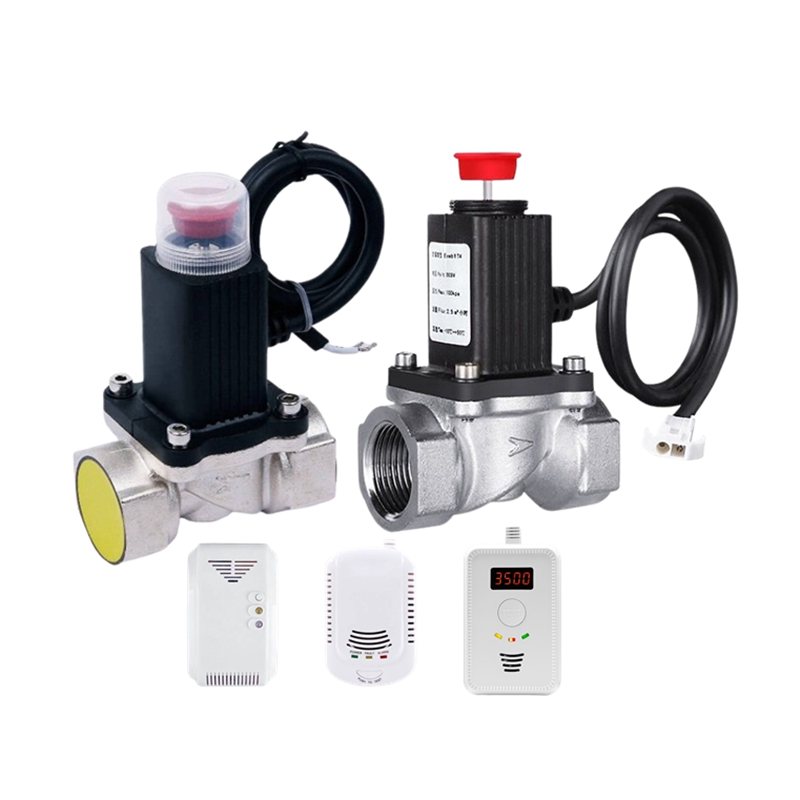
Kitchen gas detectors must deliver visible and audible on-site alerts, including 85dB loud buzzers and bright flashing LED lights. High-quality models support relay output to automatically shut off gas valves during leaks, creating full passive safety protection for families.
Global Certifications You Cannot Ignore
Certifications separate sellable residential products from risky industrial stock. For global wholesale, especially for South American markets, your kitchen gas detectors must carry household-level certifications including CE EN 50194, UL 1484, and GB 15322.2. For Brazil and Latin America, INMETRO certification compatibility is essential for smooth customs clearance and local safety inspections.
Industrial certificates like ATEX and IECEx do not qualify devices for residential use and will cause customs rejection if misused for home kitchen product declarations.
Top 4 Wholesale Sourcing Mistakes to Avoid
First, never trust multi-gas industrial detectors for kitchen sales. Their over-sensitivity creates endless customer complaints. Second, always confirm anti-grease filter design; unfiltered sensors clog quickly in kitchen environments. Third, prioritize dual-voltage plug-in models to fit global markets including North America, Europe, and South America. Fourth, keep industrial explosion-proof models separate from your residential catalog to avoid overpricing and mismatched applications.
60-Second Kitchen Suitability Test For Any Detector
You can judge any sample instantly by three simple checks. First, lightweight plastic casing means residential-ready; heavy metal Ex casing means industrial-only. Second, built-in mesh sensor filters confirm kitchen durability. Third, household safety certifications prove legal resale eligibility. If all three match, the detector is safe for home kitchen wholesale.
Residential Kitchen vs Small Café Kitchen Differences
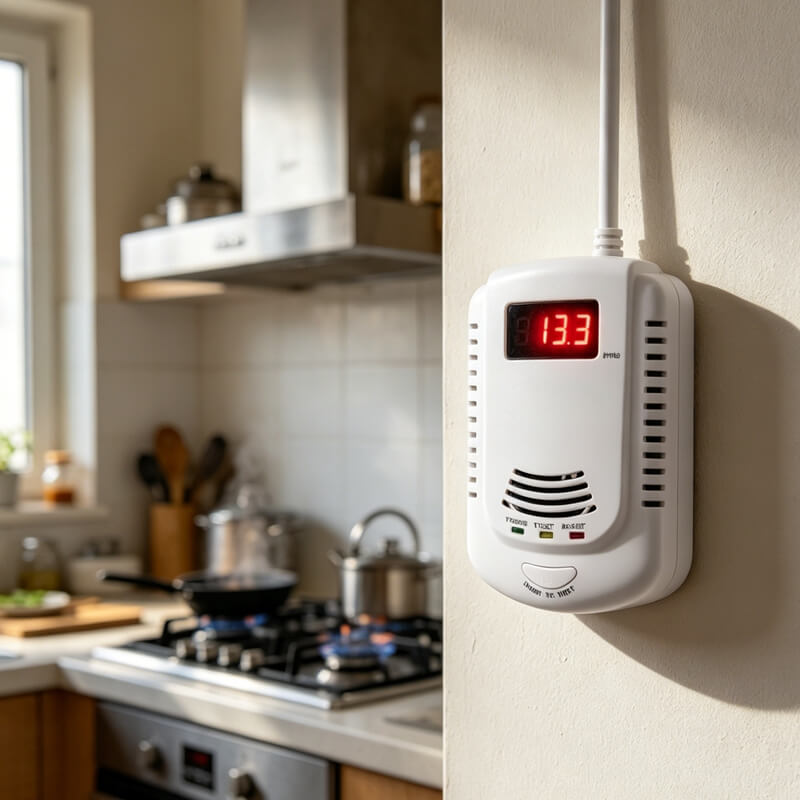
Standard home gas detectors work perfectly for family kitchens used 2–4 hours daily. However, small commercial kitchens with 10+ hour daily operation require upgraded IP54-rated hybrid detectors with stronger grease resistance. Mixing residential devices into commercial projects will lead to fast sensor aging and product returns.
FAQ – High-Intent Buyer Questions
1. Can I use industrial gas detectors for home kitchens?
No. Industrial sensors lack anti-grease protection, produce frequent false alarms, and do not meet residential safety standards for household installation.
2. What is the typical lifespan of a kitchen gas detector?
Semiconductor sensors last 3–5 years, while premium infrared sensors last 8–10 years under normal kitchen conditions.
3. Do kitchen gas detectors need professional installation?
No. Genuine residential kitchen gas detectors support plug-and-play wall mounting, requiring no licensed electrician.
4. Will steam and grease damage residential gas alarms?
Models with official anti-grease filters and humidity resistance remain stable throughout their service life. Unfiltered budget models degrade rapidly within months.
5. Do kitchen gas detectors support smart remote alerts?
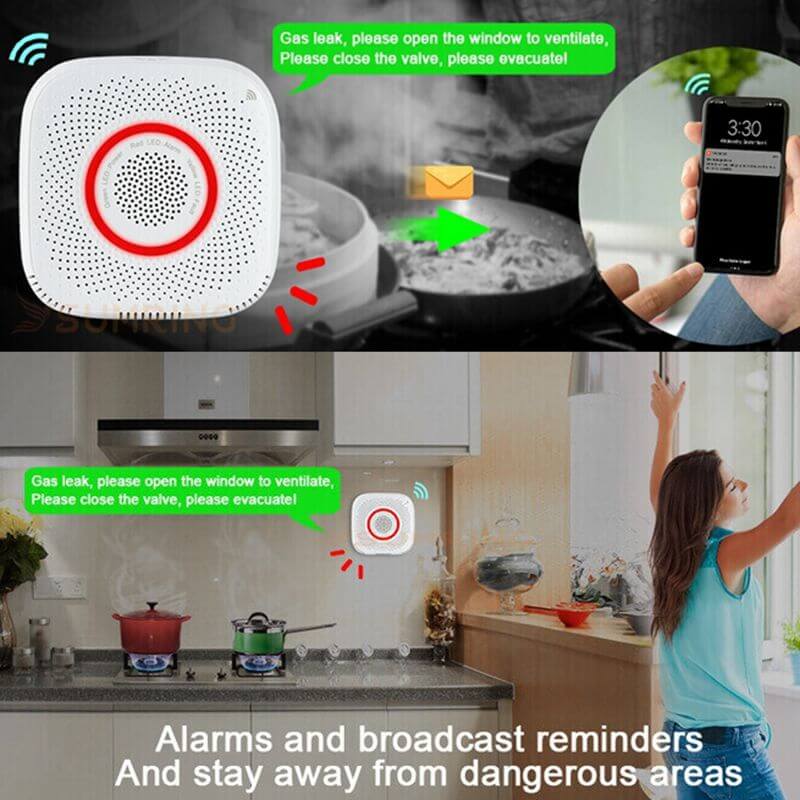
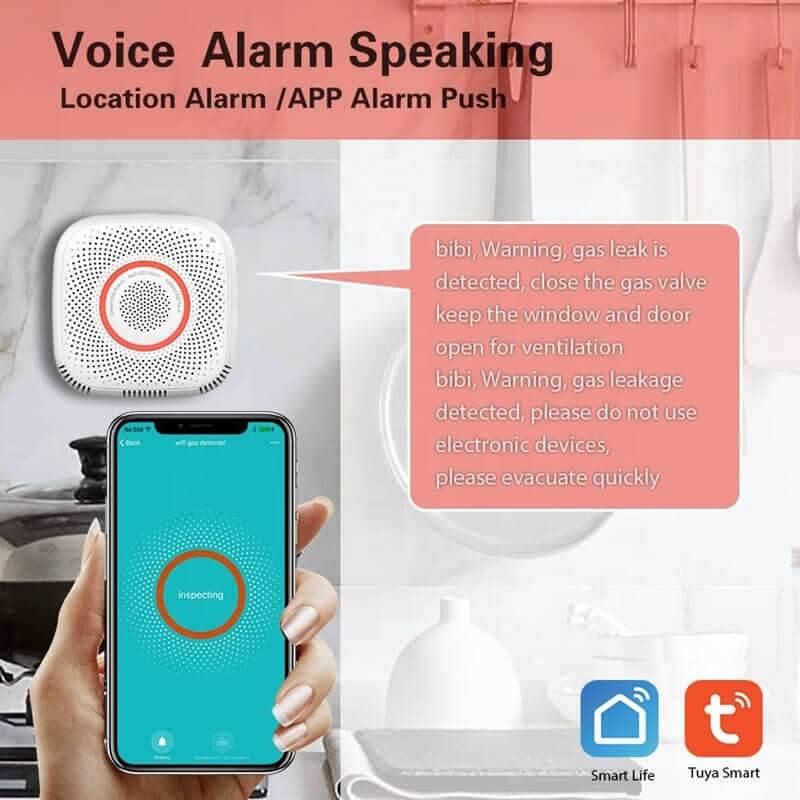
Modern residential versions support WiFi mobile alerts, while industrial detectors only support industrial control system signals unsuitable for home users.
Final Verdict & Exclusive Wholesale Source
Only specially optimized, grease-resistant, fully certified residential gas detector for home kitchens can deliver stable performance, zero excessive false alarms, and full compliance for global wholesale markets, especially South American INMETRO-regulated regions. Choosing the right kitchen gas detector product line directly reduces your after-sales rate and increases long-term repeat orders.
If you are sourcing reliable residential gas alarm with complete CE, RoHS and EN certified documents, factory wholesale pricing, and professional export support for South American and global markets, browse our full certified product lineup and get your free datasheet now: SUMRING. With over 15 years of manufacturing experience, stable global supply capacity, and long-term cooperative clients across 40+ countries, SUMRING delivers cost-effective, low-fault kitchen gas detection solutions for your wholesale business.
Latest posts
-
 A Late-Night Gas Scare: How One Smart Gas Detector Saved a Family’s Home
Do you like ?0
Read more -
 WiFi Gas Alarm: The Lifesaver That Saved a Family from a Silent Gas Disaster
Do you like ?0
Read more -
 WiFi Gas Alarm: Real-Life Safety Stories That Show Its Life-Saving Importance
Do you like ?0
Read more -
 The Silent Guardians: How a Gas Detector and Solenoid Valve Saved My Home
Do you like ?0
Read more -
 The Night the Gas Detector Screamed: A Life-Saving Lesson in Home Safety
Do you like ?0
Read more -
 The Primary Purpose of a Home Gas Leak Detector: Safety and Prevention
Do you like ?0
Read more
Search
Hot Product