If you've ever watched a fire spread through a building, you know it's not the big furniture that carries it fastest. It's the wiring. Cables snake through every wall, ceiling and floor, and when ordinary cable catches fire, it keeps burning, feeding the flames along its whole length. That's why flame retardant cable exists. And that's why buyers who source fire safety gear need to understand it properly, not just skim a spec sheet.
Let's clear up one misunderstanding right away. Flame retardant does not mean flame proof. A flame retardant cable can still catch fire. Hold a lighter to it and the insulation will ignite, it will smoke, it will burn. The magic happens when the flame source goes away. Remove the heat, and the fire slowly dies out on its own. It stops crawling along the cable. Ordinary cable, by contrast, keeps burning after the flame source is gone, letting the fire creep forward meter after meter.
That single difference is the whole story, and it's a big one. A flame retardant cable is designed to reduce flame spread and give people more time. In a fire, minutes matter. Slowing the fire's path along the wiring can mean the difference between a small incident and a building lost. That's why these cables are used in fire protection systems and critical installations, where reliability isn't optional.
You might wonder what makes the cable behave that way. It comes down to the materials. The insulation and sheath use compounds that resist burning and help the cable self-extinguish. When the heat source is removed, the material stops supporting combustion. This is tested under standards like IEC 60332, which measure how far a flame travels along a cable before it stops. The better the grade, the shorter the burn distance.
Here's something many buyers get wrong. Higher flame retardancy does not mean better in every way. There are grades, and the grade should match the application. You don't put the same cable in a family home that you put in a high-rise or a hospital. Over-specifying wastes money. Under-specifying risks lives. The smart move is to match the cable grade to the building's fire safety requirements and local codes.
Let me explain the grades a little. In common practice, flame retardant cables are rated in levels, like ZA, ZB and ZC. The higher the grade, the stronger the resistance to burning. ZA offers the toughest performance, ZC the most basic. When you're quoting a project, check which grade the specification calls for, then source accordingly. Don't assume one flame retardant cable fits all jobs, because it doesn't.
Another point worth repeating, because it's a safety issue. Please don't test cables with a naked flame at home or in the office. People see videos online and want to "check" their cable with a lighter. That's a real hazard. The smoke, the burning insulation and the risk of a full fire are not worth a quick demo. Trust the standards and the test reports from the manufacturer instead.
Now let's talk about the practical side for B2B buyers. If you supply fire alarm systems, security installations or building electrical work, flame retardant cable is likely part of your bill of materials. Fire alarm cable, in particular, should be chosen carefully because it carries signals that save lives. If that cable fails in a fire, the alarms might not sound when they should. That's why fire alarm systems call for cable that holds up under fire conditions.
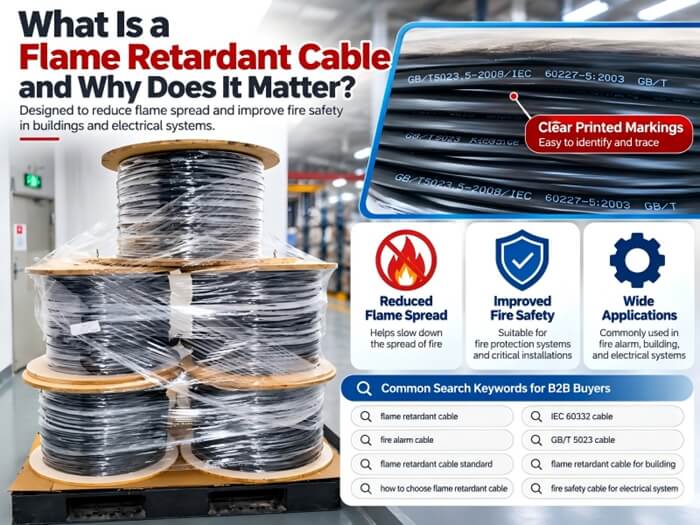
You should also know what to look for on the cable itself. Good manufacturers print clear markings along the length, showing the standard, the rating, the certification and traceability information. Those printed markings let you identify the product, trace its batch and confirm it matches the certificate. On the cable in the photos we worked from, you can see the standard references printed clearly along the black sheath. That's the kind of traceability you want in a compliant supply chain.
Common standards you'll see include IEC 60332 for flame propagation, and GB/T 5023 / IEC 60227 for the construction of the cable. Some markets also reference AS/NZS standards, and many products carry additional marks like RoHS and CE. When you compare quotes, don't just compare prices. Compare the standards each cable actually meets, and ask for the test report. A cheap cable with no verifiable standard is a risk you're buying on purpose.
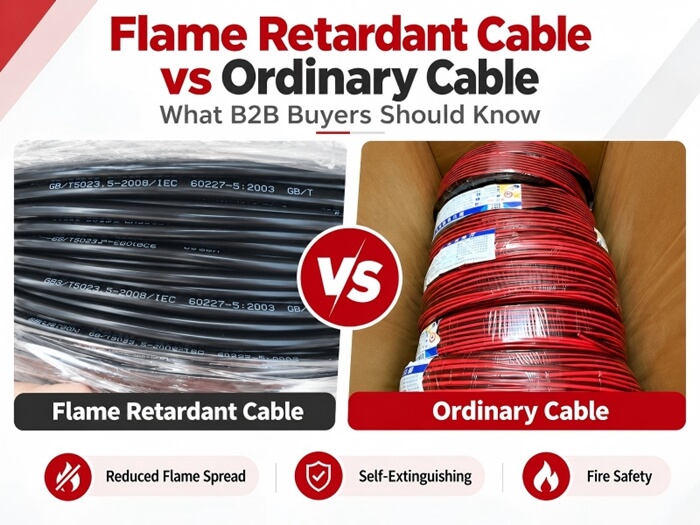
Let's be honest about price. Flame retardant cable usually costs more than ordinary cable. There's a reason. Better materials, tested performance and proper certification all cost money. But think about the alternative. Saving a few cents per meter on a fire alarm cable, then having it fail during the one fire the building ever has, is a trade nobody should make. For fire safety systems, the cable is not the place to bargain-hunt.
Where is flame retardant cable commonly used? Fire alarm systems, building electrical distribution, control wiring, and any critical installation where cable runs through areas that need fire protection. Hotels, hospitals, schools, high-rise apartments, data centres and industrial plants all rely on it. If you're consolidating suppliers for these project types, having a reliable source for compliant cable matters as much as the detectors and alarms you stock.
Let me give you a quick checklist for your next order. Confirm the standard the cable meets, check the flame retardancy grade, ask for the test report, verify the printed markings match the certificate, and make sure the certification is accepted in your destination market. Get those five things right, and you've done most of the hard work.
You might be thinking, do I really need to dig this deep into cable? If you sell fire safety equipment, yes. Your customers trust you to deliver a system that works in an emergency. The cable is part of that system. A detector can't save anyone if the wiring feeding it melts in the first minute of a fire. Understanding cable basics makes you a better advisor to your buyers, and that's what keeps them coming back.
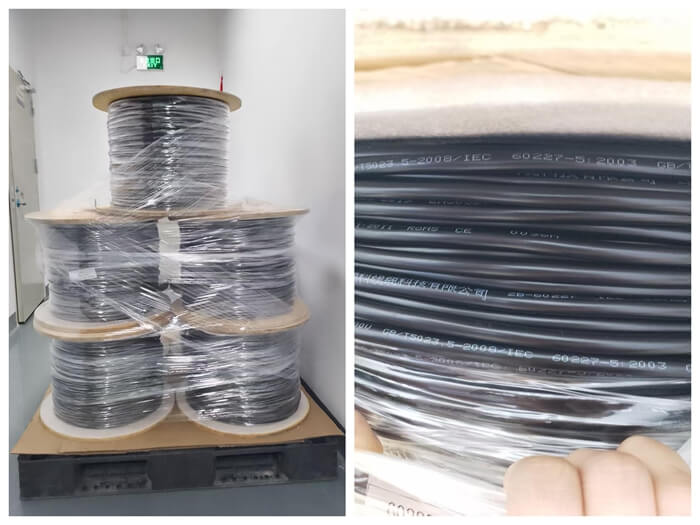
This is also where a real factory partner earns its keep. Sumring is a Shenzhen-based fire safety manufacturer with more than 15 years in the business, registered back in 2014. We hold the SUMRING trademark, operate under ISO9001 standards, and our product range covers smoke detectors, heat detectors, gas detectors, manual call points, alarm bells, strobe sirens, emergency lights and fire alarm cable. We're not a trading company, we build and source for real fire safety projects, and we back our products with proper documentation.
When you work with Sumring, you get more than a price list. You get test reports, certification documents and technical support that help you quote projects with confidence. If you need OEM or ODM arrangements, we can discuss custom branding and packaging for bulk orders. Many of our long-term partners across Europe, Southeast Asia and the Middle East build their own product lines on top of our factory base.
So here's the takeaway. Flame retardant cable can be ignited, but it self-extinguishes when the flame source is removed, and it doesn't spread the fire along its length. That's the difference between a cable that slows a fire and a cable that feeds it. Grade matters, standards matter, and testing matters. Don't skip any of them.
FAQ
- Does flame retardant cable mean it cannot catch fire? No. Flame retardant cable can still be ignited by a flame. The key is that it stops burning and self-extinguishes once the flame source is removed, so the fire doesn't keep spreading along the cable.
- What is the difference between flame retardant cable and ordinary cable? Ordinary cable keeps burning after the flame source is removed, letting the fire crawl along the cable. Flame retardant cable slows flame spread and self-extinguishes, giving occupants more time to escape.
- What standards should I check for flame retardant cable? Common references include IEC 60332 for flame propagation and GB/T 5023 / IEC 60227 for cable construction. Always ask for the test report and confirm the certification is accepted in your destination market.
- Do flame retardant cables have different grades? Yes, common grades include ZA, ZB and ZC. Higher grades offer stronger resistance to burning. Match the grade to the building's fire safety requirements and local codes instead of assuming one cable fits all jobs.
- Can Sumring supply flame retardant cable for fire alarm systems? Sumring, a Shenzhen fire safety manufacturer with 15+ years of experience, supplies fire alarm systems and related products, and can share datasheets, test reports and certification documents for bulk sourcing. Contact the sales team for project specifications.
If you're sourcing flame retardant cable or fire alarm cable for your next project, or you just want to compare what's available before you commit, Sumring's team is ready to help. Send us your specifications, and we can share datasheets, test reports, certification documents and sample details so you can verify the cable yourself. Reach out to our sales team, and let's make sure your next fire safety order is built on cable you can trust.
Latest posts
-
 4-in-1 Plug-in Natural Gas & CO Detector: Methane Leak Alarm for Safer Home
Do you like ?0
Read more -
 WiFi Smart Gas and Heat Detector: Remote Safety Alerts for Home and Kitchens
Do you like ?0
Read more -
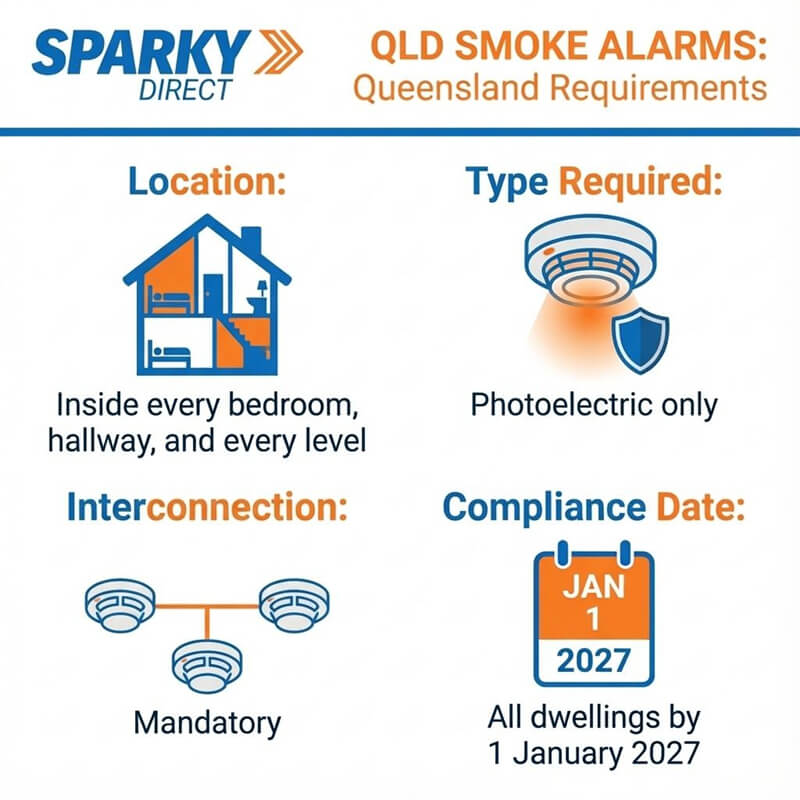 Queensland 2027 Smoke Alarm Mandate: What Fire Safety Buyers Must Know
Do you like ?0
Read more -
 433MHz Wireless Smoke & Heat Detector: Why This Alarm Is a Smart Pick for Buyers
Do you like ?0
Read more -
 How Our Factory Testing Guarantees Reliable Fire Safety Alarms
Do you like ?0
Read more -
 Sumring at Canton Fair: Fire Safety & Gas Alarm Solutions For Global Buyers
Do you like ?0
Read more
Search
Hot Product