How to Install SR-808 10-Year Lithium Battery Smoke Detector the Right Way
Have you ever stopped to think: a smoke alarm only works if it is fitted in the right spot, the right way? A fancy detector means nothing if you stick it somewhere smoke can never reach. That is why we put together this hands-on guide for the Sumring SR-808, our photoelectric smoke alarm built around a sealed 10-year lithium battery.
You know what makes this unit stand out from many cheap smoke alarms on the market? Its non-replaceable lithium power pack. Once you take it out of the box, you do not need to swap batteries every six months. No late-night low-battery chirps waking your whole household. That alone saves installers and homeowners hours of repeat service calls. But even with this great hardware, placement and installation decide whether it will alert people fast enough when fire breaks out.
First, Get Clear on Where Your SR-808 Should Go
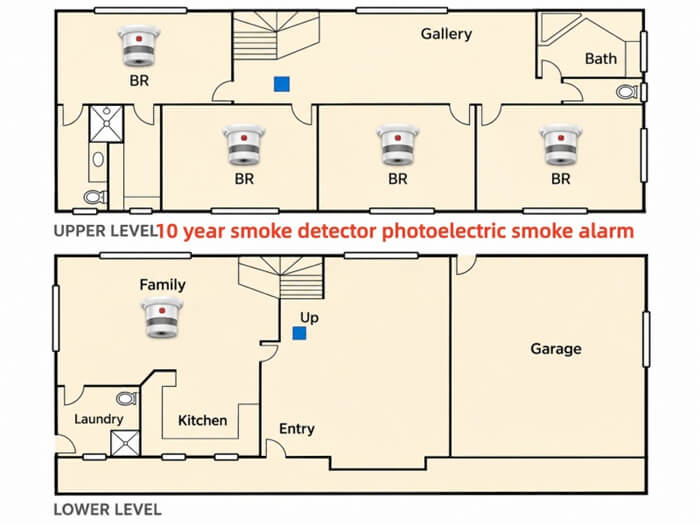
Let’s start with placement. The floor plan image you see here shows a typical two-storey family home. On the upper level, every bedroom gets its own SR-808. That is not overkill. Fires often start while people sleep; smoke creeps quietly through doorways before flames become visible. If a detector sits right outside or inside each bedroom, it gives sleeping occupants the earliest possible warning.
On the lower floor, we place one SR-808 in the main family living area, close to the stairwell that leads upstairs. Stairways act like chimneys. Smoke rises and drifts up those open spaces fast. A detector near the stairs covers the whole upper floor pathway, even if a fire starts on the ground level.
Wait a minute, what about the kitchen? Many buyers ask this. The SR-808 is a photoelectric smoke alarm. Photoelectric sensors pick up slow, smoldering fires well, but they can trigger false alarms from heavy cooking steam or burnt toast. That is why we do not recommend mounting it directly above the stove. Keep it at least 3 metres away from cooking appliances. If you need protection near the kitchen zone, place it in the family room just outside the kitchen boundary, like the layout shows.
Garages are another tricky zone. Fumes from petrol, paint, and dust can set off unwanted alerts. Our layout leaves the garage without a standard smoke detector for this exact reason. If your clients need garage coverage, we have separate gas and heat alarm models that suit that harsher environment better.
Ceiling Mount vs Wall Mount — Simple Rules for SR-808
The Sumring SR-808 is designed mainly for ceiling installation. Smoke rises, remember? Ceiling space is where smoke gathers first.
If you mount it on the ceiling, keep it at least 30 centimetres away from any light fixture or ceiling fan. Fans push air around and can blow smoke away from the sensor. Do not tuck it into the corner where two walls and the ceiling meet. Air pockets form in corners, and smoke can get trapped there instead of flowing into the detector chamber.
Wall mounting works only in specific cases. If ceilings are extra high or sloped, you can fix it to the wall, but keep it between 10 cm and 30 cm down from the ceiling surface. Do not place it too low; smoke will pass above it.
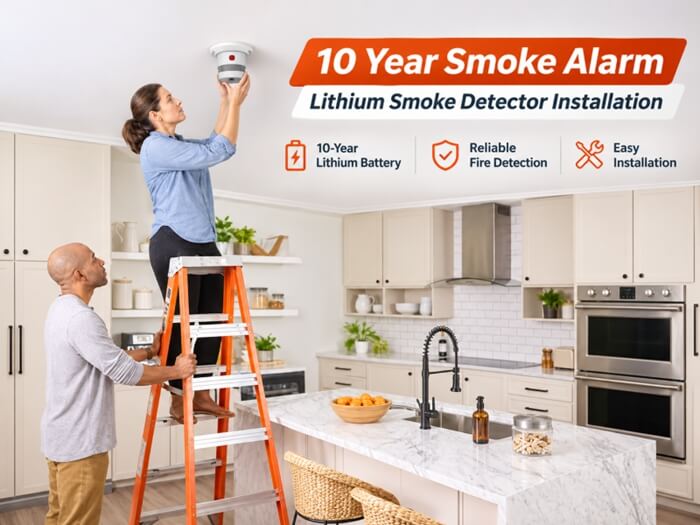
Take a look at our installation photo. You can see a homeowner fitting the SR-808 flat against the kitchen ceiling. The base plate sits flush, and the alarm clicks securely into the bracket. This is the standard setup most residential projects use.
Step-by-Step Installation for Sumring SR-808
This is a standalone smoke alarm, hardwired connection is not required. That is one big plus for rental homes, renovation jobs, and retrofits where pulling new wiring is a headache.
First, mark the screw holes on the ceiling or wall. Use the mounting base as your template. The plastic base has pre-drilled slots to line up your marks easily.
Next, drill small pilot holes and push in the plastic wall anchors. Screw the base tight to the surface. Make sure it does not wobble. A loose base can cause vibration noise, or even make the alarm fall over time.
Now, activate the internal battery. The SR-808 ships with a battery isolation tab. Pull that tab out fully. The alarm will beep once to confirm power is active. Do not skip this step; the unit stays dormant until that tab is removed.
Line up the main alarm body with the base plate, twist it clockwise until it locks. Give it a gentle tug to confirm it is locked in place.
Once mounted, hit the test button. You will hear a loud, clear alarm tone. This test checks the speaker, sensor circuit and battery power all at once. Run this test every month after installation. Mark the test date on your calendar, or tell your residential clients to set a phone reminder.
Do you need professional certification to fit this alarm? Rules change from region to region. In many residential areas, homeowners can install these themselves. For rental properties, commercial blocks or social housing projects, local fire codes may require a qualified fire technician to sign off on the work. Always check local fire safety codes before starting the job.
Common Mistakes Installers Make With SR-808
We see the same errors pop up again and again from new installers. Let’s run through them, so you can help your clients avoid these traps.
Number one: placing detectors too close to air vents, air conditioners or extractor fans. Moving air disperses smoke, and the sensor may not trigger until the fire is already out of control.
Number two: covering the smoke alarm with paint, stickers or dust covers. Builders sometimes cover alarms during renovation. Those covers must come off before the home is occupied. Paint clogs the sensor openings and stops smoke from entering.
Number three: mixing up smoke alarms and heat alarms. The SR-808 detects visible smoke particles. It does not react to heat alone. For kitchens, boiler rooms or garages, heat alarms are the right pick. Sumring carries heat detectors and combined sensors for these tricky spots.
Another easy slip: buying one single alarm for an entire large house. One detector cannot cover every room. The floor plan we shared uses one per bedroom plus one on the living level. That layout matches widely accepted residential fire safety guidance.
What Makes Sumring SR-808 a Good Fit for Your Fire Safety Projects
As a manufacturer with years of experience making fire detection gear, Sumring builds the SR-808 for steady, reliable service. The sealed lithium cell lasts a full 10 years. When the end of that service life arrives, the alarm will chirp to signal replacement, and the whole unit gets swapped out. No battery replacement hassle for end users.
Its photoelectric sensor works best for slow, smoldering fires — the kind that burn furniture, bedding and curtains and release thick smoke before flames break out. These are the fires that catch sleeping families off guard.
The unit has a compact, clean white casing. It does not stick out awkwardly and blends into most home interiors. It also meets key international fire safety standards, so you can supply it to residential buyers, property management companies and housing contractors.
We ship these alarms in bulk for B2B buyers. If you source fire safety products for your store or contracting business, stock levels matter. The SR-808 is one of our steady moving lines for residential fire safety packages.
Quick Tip for Maintenance
Even with a 10-year battery, maintenance is not zero. Dust builds up inside the sensor chamber over months. A quick vacuum over the alarm openings once every six months keeps the sensor clear. Do not use water or cleaning spray. Liquid inside the detector will break the sensor.
If the alarm goes off and there is no fire, check for steam, burnt food or heavy dust. Ventilate the room and press the silence button if the SR-808 has that function. If false alarms keep happening, the detector is probably in the wrong spot. Move it further away from the source of steam or dust.
FAQ
- Can Sumring SR-808 smoke detector be interconnected with other alarms? This SR-808 is a standalone model. We have other Sumring smoke alarms with wireless interlink function if you need linked alarms across a property.
- How long does the lithium battery in SR-808 really last? The sealed lithium battery is rated for 10 years under normal operating conditions. The whole alarm must be replaced once it reaches end-of-life.
- Can I install SR-808 inside a bathroom? No. Steam from showers will trigger frequent false alarms. Keep smoke alarms well away from bathrooms.
- Does SR-808 work in mobile homes or prefab houses? Yes, it fits mobile and modular homes, just follow the same ceiling placement rules and stay clear of heating vents.
- What sound will I hear when the SR-808 battery reaches end of life? It will send a short, repeating chirp every 30 to 40 seconds, telling you the unit needs full replacement.
Now, if you are ready to add Sumring SR-808 10-year lithium smoke detectors to your fire safety product lineup, reach out to our team directly. Drop us a message to ask for product datasheets, bulk pricing, sample arrangements and lead time details. Our sales team can walk you through certification documents, custom packaging options and shipping plans for your market. This 10-year smoke alarm is a steady seller for residential fire safety projects, and Sumring is ready to support your orders.
Latest posts
-
 Sumring 2026 Nov Stock Update: Smoke & Gas Detectors Stock Running Low
Do you like ?0
Read more -
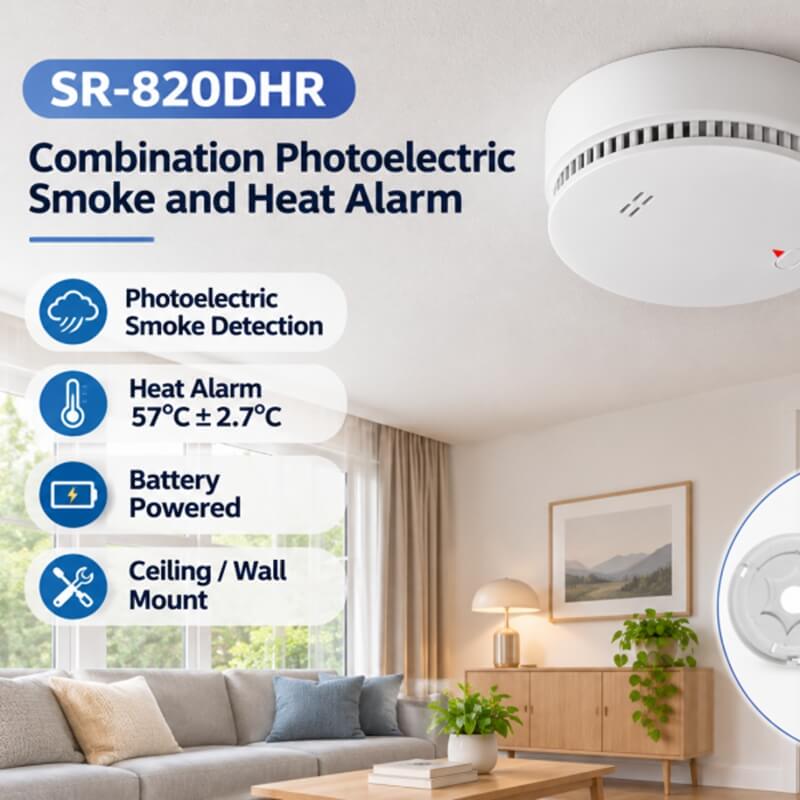 Why SR-820DHR Combined Smoke & Heat Alarm Deserves a Spot on Your Product List
Do you like ?0
Read more -
 England Records 260,577 Fire False Alarms: What Should Contractors Review?
Do you like ?0
Read more -
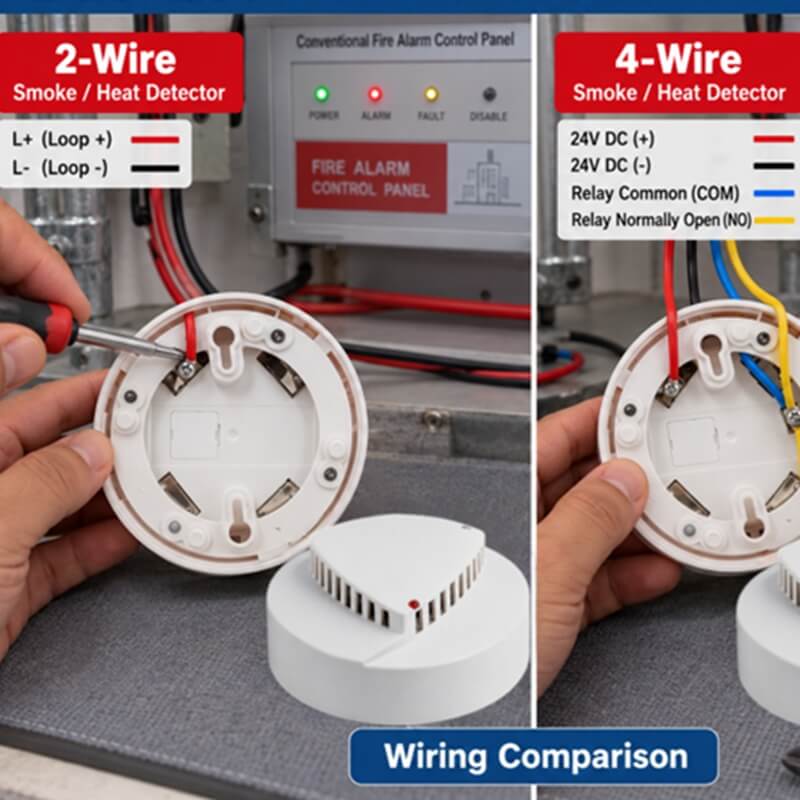 2-Wire vs 4-Wire Smoke and Heat Detector: What’s The Real Wiring Difference?
Do you like ?0
Read more -
 What Is a Flame Retardant Cable and Why Does It Matter?
Do you like ?0
Read more -
 4-in-1 Plug-in Natural Gas & CO Detector: Methane Leak Alarm for Safer Home
Do you like ?0
Read more
Search
Hot Product