If you’ve shopped for home gas safety gear lately, you’ve definitely seen this phrase thrown around: “gas detector compatible with solenoid valve.” You might’ve stared at the product listing and thought—wait a second, my gas alarm already makes loud noise and flashes red lights when gas leaks. Why would I need another metal valve part to hook up to it? It’s a fair question most first-time buyers never get a plain-spoken answer to.
You know what? Lots of homeowners grab a cheap wall-mounted LPG detector, plug it in, and assume that shrill alarm sound is enough to stop a dangerous gas buildup dead in its tracks. I hate to burst that bubble, but sound alerts only go so far. What happens if no one’s home to rush over and twist the tank shutoff knob manually? What if you’re asleep, the alarm blares, and you panic so hard you can’t find the gas cylinder’s valve fast enough? That’s exactly where the solenoid valve steps in as the missing piece of your gas safety puzzle.
This piece will break down every single real function a solenoid valve serves when paired with a combustible gas detector—no overly confusing engineering jargon, just plain talk for renters, homeowners, small café owners, and anyone managing a space that runs on natural gas or bottled LPG. We’ll also clear up one huge shopping detail most product pages gloss over: most gas detectors only support solenoid valve linkage, they do not ship with the valve included. That small detail trips up hundreds of international buyers every single month.
Let’s Start With The Basics: What Even Is A Gas Detector?
Before we dive into valve functions, let’s level the playing field for anyone who’s new to this gear. A gas detector (like the SUMRING SR-901NVC-DC model many households pick up) is a wall-mounted sensor device wired to your home power supply, usually DC12–24V for residential setups. Its core job is simple: it sniffs the surrounding air 24/7 for traces of combustible gas, whether that’s piped natural gas or bottled liquefied petroleum gas from a red gas cylinder.
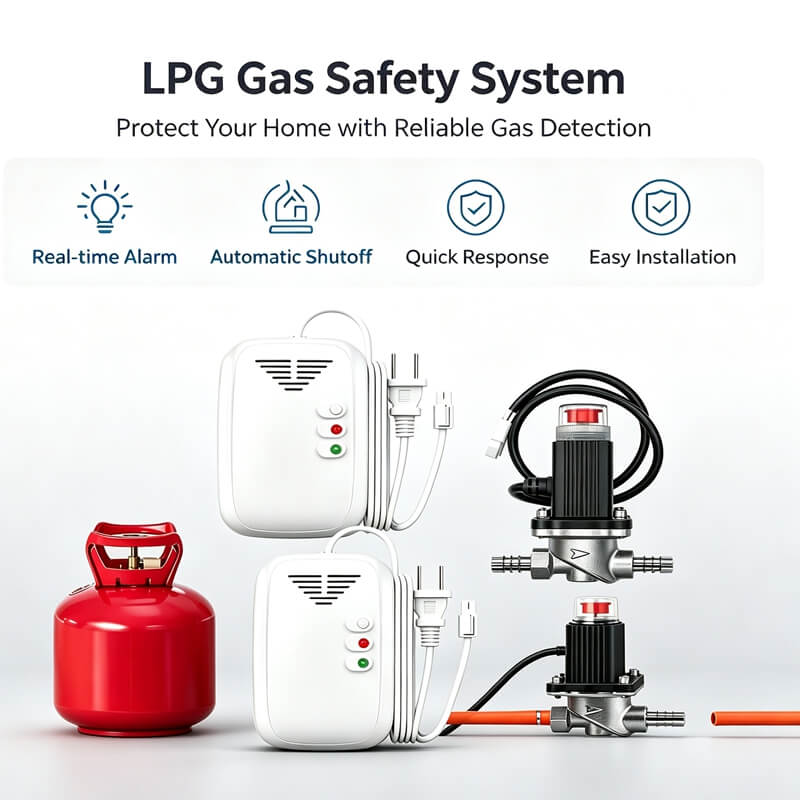
When airborne gas hits a pre-set dangerous concentration—most standard units trigger at 10%±5% LEL for natural gas—the detector fires off two immediate signals: a loud audio buzz hitting 75 decibels or higher, plus a flashing red LED light to grab visual attention. Mid-range detectors add an extra trick: a built-in relay output port on the back of the plastic ABS housing. That relay port is the secret gateway that lets the detector send an electrical signal straight to a secondary device, like a ventilation exhaust fan or, you guessed it, a gas solenoid valve.
Without that relay output feature, a detector can only alert you; it cannot interact with other hardware to physically alter your gas supply flow. That’s a key detail to note if you’re browsing detector listings online. Cheaper entry-level gas alarms skip relay ports entirely, so they cannot connect to any automatic shutoff valve at all.
The Critical Gap Gas Detectors Alone Cannot Fix
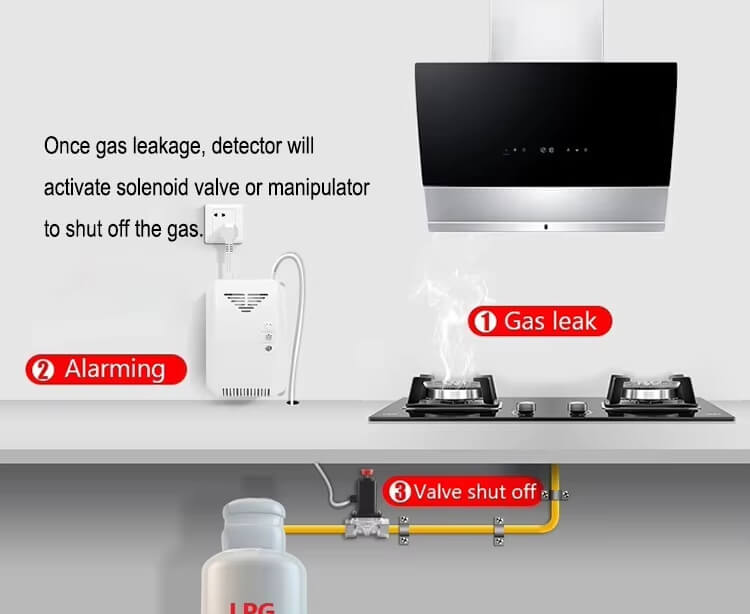
Let’s paint a relatable, everyday scene to highlight the flaw in relying solely on a standalone gas detector. Imagine you head out for a full day of errands, leaving your gas stove’s supply line slightly loose on the LPG tank. A tiny leak starts slow, seeping flammable gas into your kitchen air while you’re miles away. An hour later, the gas crosses the detector’s safety threshold, and the alarm kicks on. It buzzes nonstop, red light blinking away in an empty house.
No one hears the noise. No one sees the flashing light. The gas continues to pour out, building up to explosive levels inside your closed kitchen space. By the time you walk through your front door hours later, the hazard has already spiraled into a life-threatening risk. That gap— the window between the detector alert activating and a human physically cutting gas flow—is the exact problem solenoid valves were built to erase entirely.
Even if you are home when a leak starts, human reaction time creates risk. Think about a midnight gas leak alarm wake-up: groggy, half-asleep, fumbling through dark cabinets to locate your gas cylinder shutoff. Those 30 seconds of scrambling add up fast when flammable gas accumulates by the second. A linked solenoid valve eliminates that vulnerable delay entirely.
Breaking Down The Core Jobs Of A Solenoid Valve For Gas Alarm Systems
Instant, Hands-Free Fuel Cutoff When Danger Hits
Here’s the valve’s number-one purpose, plain and simple: it receives the electrical trigger signal from your activated gas detector and mechanically seals off your gas supply line within a split second. No human touch required, no waiting around to locate a manual tank knob.
The hardware inside the solenoid valve runs on electromagnetic force. When the detector’s relay sends power to the valve’s coil, a small metal plunger snaps forward to block the gas pathway running through the valve’s metal body. The moment gas reaches unsafe levels in your room, fuel flow stops cold—whether you’re home, asleep, or hundreds of kilometers away running errands. This single function slashes the chance of fire or gas inhalation injury more than any alert sound or flashing light ever could.
Job 2: Lock Gas Flow Closed Until You Clear The Hazard Manually
You might wonder: once the valve shuts gas off automatically, does it flip back open on its own once gas levels drop? The short answer is no, and that design choice is intentional safety engineering.
After a solenoid valve engages its shutoff position, it stays locked closed until you press the small red reset button mounted on top of the valve unit yourself. This built-in lockout stops a dangerous loop from unfolding. Picture this scenario: a small leak triggers the valve to close, gas levels slowly drop as trapped air ventilates the room. If the valve re-opened automatically once air cleared, the leak would resume, creating an endless cycle of gas buildup and shutdowns without any chance for you to fix the broken pipe or loose tank fitting first.
The manual reset rule forces you to investigate the source of the leak, fix whatever hardware failed, and confirm safe air quality before gas can flow again. It’s a failsafe layer people rarely consider until they learn how these systems operate.
Job 3: Create A Fully Automated Home Safety Loop With Relay Output Detectors
High-quality gas detectors (like the SR-901NVC-DC model referenced on most supplier product pages) carry dual relay output capability. That means one detector unit can send simultaneous trigger signals to two separate safety devices at once: a ventilation exhaust fan and a solenoid shutoff valve.
Let’s walk through that automated loop step-by-step:
- Detector senses dangerous LPG/natural gas concentration in room air
- Alarm activates loud sound + flashing LED warning for anyone nearby
- Relay port sends power signal to exhaust fan, which turns on to ventilate gas out of the room
- Second relay signal trips the solenoid valve to lock gas supply shut
- System stays locked until user resets valve and addresses the leak root cause
This full loop turns a passive alert device into an active hazard-mitigation system, instead of just a noise-making sensor. Renters running small food stalls or homeowners with indoor gas heating setups consistently rank this dual-device automation as their top reason to invest in a separate solenoid valve alongside their detector.
A Quick Real-World Analogy To Wrap Your Head Around This Pairing
If home gas safety gear feels abstract, use this everyday comparison to make the relationship click: your gas detector acts like a smoke alarm inside your house, while the solenoid valve acts like an automatic fire sprinkler head.
Your smoke alarm can scream to tell you there’s smoke, but it cannot put out flames on its own. The sprinkler system activates physically to stop the fire spread the second the alarm detects heat. The exact same dynamic applies to gas hardware. The detector shouts that gas is leaking; the solenoid valve takes immediate physical action to cut the hazard’s fuel source before harm unfolds. It’s a simple analogy, but it sticks with buyers far better than dense technical descriptions.
Important Fine Print: Solenoid Valves Are Sold Separately For Most Detector Models
This is the detail that causes dozens of support tickets for gas safety suppliers every week, so it deserves clear, upfront attention. Nearly all standalone gas detectors you browse on Alibaba International, Amazon, or local hardware shops only offer compatibility with solenoid valves—they do not bundle the valve hardware inside the original product box.
Listing text will often state phrases like “supports matching solenoid valve” or “works with external shutoff valve.” This wording does not mean the valve comes included with your detector purchase. You must source the solenoid valve as a separate order if you want automatic gas cutoff functionality. Many first-time buyers misread product copy, receive only the plastic detector unit in their shipment, and reach out to sellers confused about missing valve parts. Double-check listing small print before you complete checkout to avoid this frustrating mix-up.
Can You Skip Buying A Solenoid Valve If You Own A Gas Detector?
Technically, yes—your gas detector will still perform its core alert function without a linked valve. It will buzz and flash lights to notify you of gas leaks, no extra hardware required. But skipping the valve means you lose every automated safety advantage we covered earlier.
Ask yourself one simple question to weigh the tradeoff: Do you spend large chunks of time away from your home or business space without anyone present? If your answer is yes, a solenoid valve becomes a worthwhile investment. If you only use gas appliances while someone stays inside the room 100% of the time, you might get by relying solely on manual tank shutoffs when alarms trigger. Still, even full-time home occupants face midnight leak risks where split-second automatic cutoff makes all the difference. There’s no real downside to adding this layer of protection, only reduced risk of serious accidents.
How To Match The Right Solenoid Valve To Your LPG/Natural Gas Detector
Not every solenoid valve works with every gas detector unit, and mismatched voltage ranks as the most common compatibility error shoppers run into. Most household detectors run DC12–24V operating voltage, so you need to source a gas solenoid valve built to operate on the exact same DC power range as your sensor. Valves built for AC mains power will fail to trigger when wired to low-voltage DC detector relay ports.
You also need to match your gas supply pipe fitting size to the valve’s inlet/outlet connectors. Two standard styles exist for residential use: barb fittings designed to slide onto flexible orange rubber LPG hose, and threaded metal connectors for hard-plumbed natural gas pipe lines. Double-check which fitting type your gas tank or supply line uses before ordering your separate valve unit. Brands like SUMRING offer both fitting variants to align with global buyer pipeline standards.
Common Misconceptions About Detector & Solenoid Valve Setups
Let’s clear up three persistent false beliefs that float around online forums and hardware store conversations:
- Myth: Solenoid valves add huge power drain to my detector setup. Fact: Standard gas solenoid valves draw only minimal power when triggered, while resting at zero power draw until the alarm activates. The full system’s total rated power sits around 2.5W for most home detector units, a trivial load for household low-voltage power adapters.
- Myth: Solenoid valves only work for bottled LPG gas tanks, not piped natural gas. Fact: High-quality universal valves support both fuel types without modification, as long as you match the pipe fitting connector style to your supply hardware.
- Myth: I need a professional licensed technician to wire a detector and solenoid valve together. Fact: Most consumer-grade gear uses simple plug-and-play wiring terminals, with printed wiring diagrams included inside every detector box. Basic DIY assembly works for most residential spaces; commercial kitchen installations may call for certified tradespeople per local building codes.
Real Household Scenarios Where This Combo Saves Lives
We can talk about technical functions all day, but tangible real-life use cases drive home why solenoid valve linkage matters so much. Three frequent high-risk spaces benefit massively from paired detector-valve systems:
- Vacation rental homes: Property owners cannot guarantee guests will respond fast enough to gas alarms, and empty rental periods leave spaces unattended for weeks. An automatic cutoff valve eliminates landlord liability from unaddressed gas leaks.
- Senior living households: Elderly residents may face mobility or hearing limitations that slow their response to loud alarm sounds. Instant automated gas shutdown removes physical pressure to rush and manually seal tank valves.
- Small street food kiosks: Stall operators often step away from gas-powered cooking equipment to serve customers, leaving unattended burners and LPG cylinders vulnerable to loose hose leaks. The linked valve cuts gas flow the second unsafe air registers, even when staff stand meters away serving orders.
Every one of these spaces shares a single core risk factor: gaps in human oversight that standalone gas detectors cannot resolve without automatic hardware intervention.
FAQ: Frequently Asked Questions About Gas Detectors And Solenoid Valves
Q1: Does every gas detector model have ports to connect a solenoid valve?
A: No. Low-cost basic gas alarms skip relay output ports entirely. Mid-tier and industrial household detectors like the SR-901NVC-DC include relay terminals to wire external shutoff valves and exhaust fans. Always scan product specs for “relay output” before purchasing if you plan to add a solenoid valve later.
Q2: If my solenoid valve shuts gas off automatically, can I leave my home unattended for multiple days safely?
A: The valve drastically cuts accident risk, but it does not eliminate all hazard. Always double-check stove burner knobs are fully turned off before leaving, and maintain proper room ventilation. The valve acts as a backup safety layer, not a replacement for careful appliance use.
Q3: Can one gas detector connect two separate solenoid valves for multiple gas tanks?
A: Most single relay detector units only support one solenoid valve at a time. Dual-relay sensor models can power one valve plus an exhaust fan simultaneously, but running two valves requires an external relay splitter accessory sold separately by safety hardware suppliers.
Q4: How often should I replace my gas detector and linked solenoid valve hardware?
A: Combustible gas sensor cores degrade over time; manufacturers recommend detector replacement every 5 years. Solenoid valve mechanical parts hold up for 8–10 years with regular cleaning of gas line sediment, though you should inspect valve reset function every six months to confirm smooth operation.
Q5: Why do product listings state solenoid valves ship separately from gas detectors?
A: Global buyers use wildly different gas pipe fittings, voltage standards, and fuel types. Selling detectors and valves as separate items lets customers select valve hardware matched to their local pipeline setup, rather than forcing everyone to pay for a one-size-fits-all valve that may not fit their home gas supply hardware.
Ready To Build A Reliable Gas Safety System That Works Seamlessly?
We’ve covered every critical job a solenoid valve fills alongside a gas detector, cleared up common shopping mix-ups, and walked through real-life risk scenarios where this pairing protects people and property. But knowing how the two parts work together only counts if you pick hardware built to sync without frustrating compatibility headaches.
Have you spent hours scrolling through supplier listings, guessing if a random detector’s relay port will match your solenoid valve’s voltage or hose fitting? Many international buyers waste weeks testing mismatched generic sensors and valves that fail to trigger reliably during leaks. It’s a costly, stressful mistake no home or business owner should deal with.
SUMRING designs its SR-901NVC-DC gas detector specifically to pair with universal LPG and natural gas solenoid valves, with DC12–24V relay terminals built for plug-and-play linkage, ABS durable housing, and calibrated sensors that hit safety alarm thresholds consistently. Every unit includes clear wiring guides so you can set up your automatic shutoff loop without hiring outside tradespeople. If you want to skip the guesswork and grab a detector engineered for seamless solenoid valve compatibility, click SUMRING to view.
Whether you run a rental property, small food stall, or just want rock-solid protection for your family’s kitchen, a matched SUMRING setup removes every compatibility roadblock we talked about in this guide. Are you ready to stop relying only on alarm noise, and add automatic gas cutoff safety to your space?
Latest posts
-
 Is this gas detector suitable for home kitchens? A Complete Buying Breakdown
Do you like ?0
Read more -
 A Late-Night Gas Scare: How One Smart Gas Detector Saved a Family’s Home
Do you like ?0
Read more -
 WiFi Gas Alarm: The Lifesaver That Saved a Family from a Silent Gas Disaster
Do you like ?0
Read more -
 WiFi Gas Alarm: Real-Life Safety Stories That Show Its Life-Saving Importance
Do you like ?0
Read more -
 The Night the Gas Detector Screamed: A Life-Saving Lesson in Home Safety
Do you like ?0
Read more -
 The Primary Purpose of a Home Gas Leak Detector: Safety and Prevention
Do you like ?0
Read more
Search
Hot Product