What Happens When Smoke Detector Batteries Leak? Real‑World Case From Sumring
You don’t expect complaints from orders placed two years ago — but it still happens If you source safety hardware for your business, you’ve probably had that sinking feeling. Everything looks fine on delivery; you test samples, sign off shipments, and move on to the next project. Months, even years roll by. Then one day, a message lands in your inbox pointing out product trouble you never saw coming.
Say you ordered smoke detectors two years back. The units sat in stock, stored properly in your warehouse. Time passes. When staff start opening cartons for resale, they spot battery leakage inside several SR‑803‑5 standalone smoke alarm devices. The battery fluid damaged internal components and packaging boxes. Would your supplier step up? Many factories would brush you off. They would point to expired warranty windows and say the order is too old to support.
You know what? That is exactly the real‑life scenario Sumring faced with one of our long‑term buyers based in the Philippines. This is not made‑up marketing copy. Every detail comes from actual order records, chat logs, and physical photos taken during the incident.
Sumring, officially Shenzhen Sumring Technology Co., Ltd, is a fire‑security equipment manufacturer founded in 2014. Our factory sits in Pinghu, Shenzhen, Guangdong, China. For more than 15 years, we have built fire‑safety products including smoke detectors, gas detectors, manual call point covers, and full fire alarm systems. Our goods ship to over 40 countries across North America, Europe, Africa, the Middle East and Asia. We hold EN, UL, CE and RoHS certifications; around 70 % of our business comes from repeat regular clients. We offer OEM, ODM and OBM services for global partners of all sizes.
Let’s walk through the full story step‑by‑step
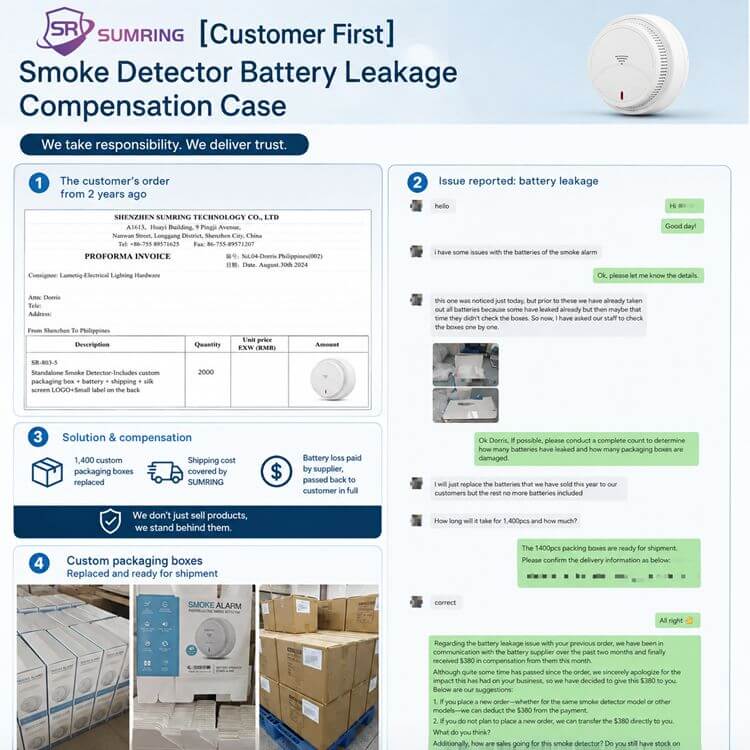
Step 1: The original purchase order Back in August, the customer placed an order for 2000 pieces of SR‑803‑5 standalone smoke detectors. Each unit came with custom packaging boxes, built‑in batteries, silk‑screen logos, and SUMRING labels printed on the back shell. The goods left our Shenzhen facility and travelled by sea to warehouses in the Philippines. Everything checked out at the time of shipment. No obvious defects were found before containers left our loading dock.
Two full years went by. The customer kept large stock quantities in their local warehouse. Most buyers assume once goods pass inspection at shipment, no further issues will surface down the line. Is that always realistic? Well, battery‑powered safety devices carry hidden risks even when manufacturing runs go perfectly.
Step 2:The customer reaches out with bad news The client’s warehouse team began unpacking stock for local sales. When opening cartons, workers found multiple smoke alarms suffering from battery leakage. Battery fluid corroded battery compartments and ruined many original retail boxes. The customer sent photos and chat screenshots over to our support team.
They explained the situation clearly. Most of these batteries had already leaked. Their team could not catch this damage earlier; you cannot spot internal battery corrosion without opening each individual box one‑by‑one. They asked our team how we intended to resolve this unexpected problem.
Many manufacturing businesses would respond with generic excuses. They might mention storage conditions in the destination warehouse. They might reference standard warranty time limits and close the conversation. Safety hardware is different, though. Smoke alarms save lives. Any failure related to these devices matters far more than regular consumer goods.
Our support team asked for clear facts. We requested a full count of damaged product, photos of affected units, and confirmation of how many original packaging boxes got ruined. We did not push blame toward our customer. We wanted hard facts so we could design fair compensation.
Step 3:What Sumring agreed to do for this aged‑order complaint After reviewing all evidence, our internal team made a firm decision. Even though two years had passed since the original order date, Sumring took full responsibility for the battery‑leakage incident.
Here is exactly what we delivered:
- Brand‑new custom‑printed packaging boxes for all 1400 affected units
- We covered all shipping costs to send replacement boxes to the Philippines
- Full cash reimbursement for the total value of all damaged batteries; funds sent directly back to our customer
Think about that for a second. Most factories will not touch a complaint from a two‑year‑old shipment. Why did we choose this path?
Safety products carry heavy moral weight. If our end‑user installs a smoke detector with leak‑damaged internal parts, that device might fail during a real fire emergency. We cannot accept that risk, even if the problem traces back to battery‑cell degradation after long‑term storage. We build fire‑safety gear; trust forms the core of every business deal we make.
Our customer got two options for the cash compensation. They could place a brand‑new equipment order and apply the credit toward new goods. Or, if they had no immediate purchase plans, we could send direct cash transfer of $380 USD straight to their account. The 1400 replacement packaging cartons were produced and prepared for shipment quickly. We only needed our partner to confirm accurate delivery details.
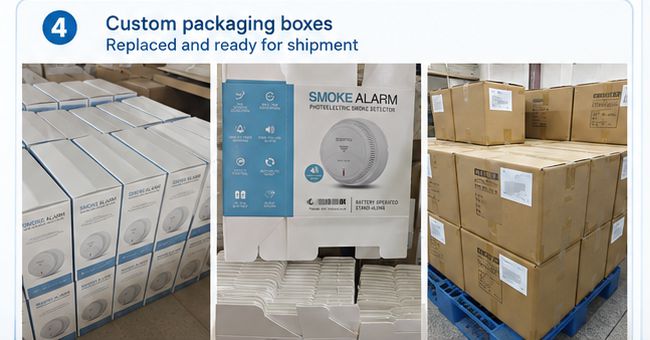
Step 4:Shipment of replacement packaging boxes Our production team finished manufacturing all custom‑printed cartons. Every box carried the original Sumring smoke‑alarm artwork matching SR‑803‑5 specifications. We packed them securely onto export pallets, and booked ocean freight to our customer’s location in Philippines.
Photos from our warehouse show stacks of finished retail boxes sealed for export. These were not generic blank cartons. They matched the exact custom packaging the buyer originally ordered for their local market sales.
What can global buyers learn from this battery‑leakage case? You might wonder how battery leakage happens even with correctly manufactured smoke detectors.
Battery cells degrade over long storage periods. Even high‑quality primary batteries can develop leakage after years sitting idle inside sealed product boxes. It is not always a manufacturing flaw on day‑one. Long‑term warehouse storage amplifies this risk. Temperature swings in shipping containers and local storage spaces speed up battery aging.
Does that mean battery‑powered smoke alarms are unsafe? Not at all. But it highlights one critical point for importers: always rotate your stock. Move older inventory out first. Avoid locking battery‑operated safety devices inside storage for multiple years without periodic spot‑checks.
Have you ever received a surprise product complaint long after shipment closed out? It catches many procurement teams off‑guard. This case shows why after‑sales support matters as much as unit price and certification paperwork when you pick a fire‑alarm manufacturer.
A supplier can show you all the certificates, fancy catalogues, and factory tour photos in the world. The real test arrives when something goes wrong months or years after your order arrives. That is where true EEAT value shows up for B2B buyers sourcing fire‑safety hardware.
Sumring works with 30 well‑known global brands and maintains cooperation with over 600 partners spread across more than 100 countries. Our product portfolio covers manual call point covers, full fire‑alarm systems, installation accessories, gas detectors, horns and enclosures. We know safety‑product buyers worry about what happens after containers leave China ports.
Frequently Asked Questions
Q1: What causes smoke‑detector battery leakage after long‑term warehouse storage?
A: Primary battery cells slowly degrade over time. Temperature fluctuation during sea freight and long‑duration storage can trigger electrolyte leakage, even when units pass pre‑shipment quality checks.
Q2: Will Sumring handle complaints for orders placed more than 12 months ago?
A: We assess each incident individually. Safety‑related product issues get priority review, regardless of order age, as seen in this SR‑803‑5 smoke detector case.
Q3: What is the SR‑803‑5 smoke detector?
A: SR‑803‑5 is Sumring’s standalone battery‑operated smoke alarm, built for commercial and residential markets, supports custom‑printed packaging and private‑label branding.
Q4: How should importers lower battery‑leak risks for stock‑held smoke alarms?
A: Practice strict stock rotation. Ship older inventory first. Run periodic spot‑checks by randomly opening stored cartons, especially for goods stored longer than 18 months.
Q5: Does Sumring offer custom packaging for smoke‑detector orders?
A: Yes. We produce custom‑printed retail boxes, silk‑screen shell marking, private‑label logos and OEM packaging solutions for bulk buyers.
If you are hunting for a reliable fire‑safety manufacturer that stands behind goods long after shipment wraps up, reach out to Sumring. Whether you need standalone smoke alarms like SR‑803‑5, gas detectors, manual call‑point hardware or full fire‑alarm system solutions, our team can walk you through product specs, custom‑label options and after‑sales terms. Drop us a message via info@sumring.com or visit SUMRING to talk about your upcoming project.
Latest posts
-
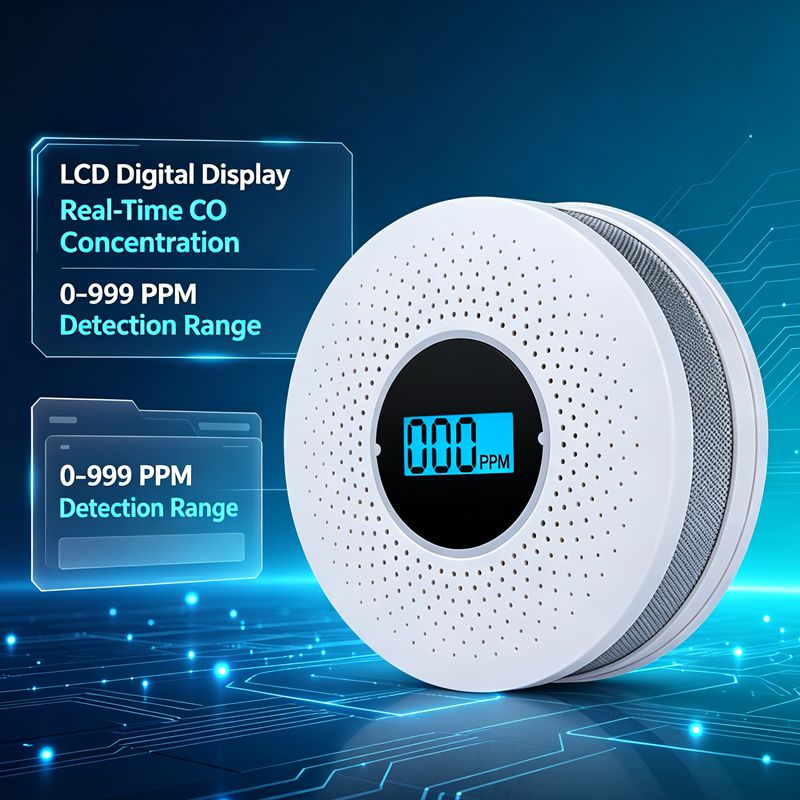 Does Smoke & CO Alarm Reactivate Instantly When Hazards Spike In Hush Mode?
Do you like ?0
Read more -
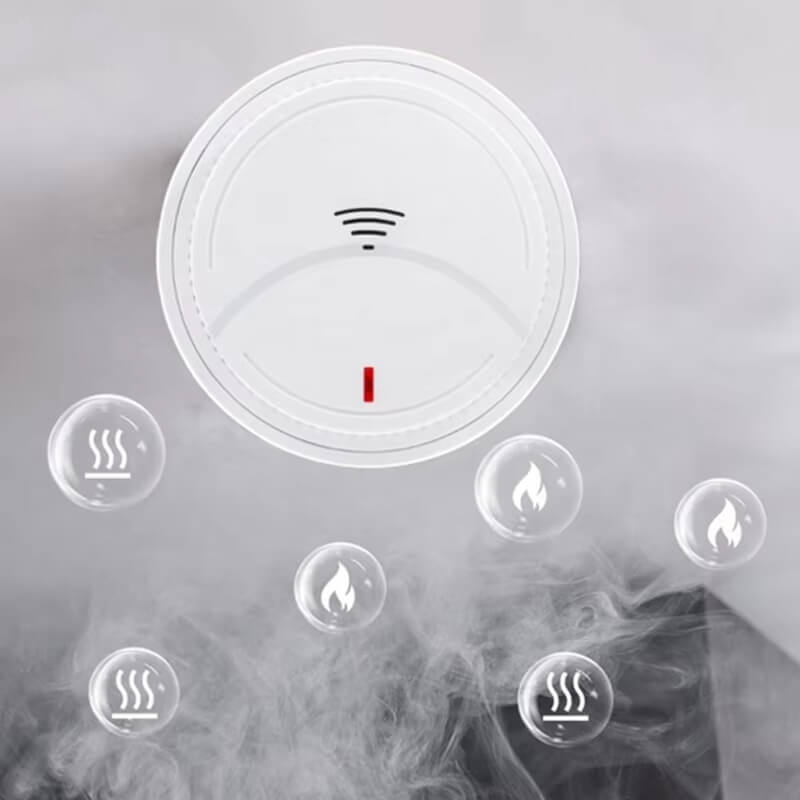 How Do Fire Smoke Alarms Operate? Key Types, Advantages & Practical Usage Tips
Do you like ?0
Read more -
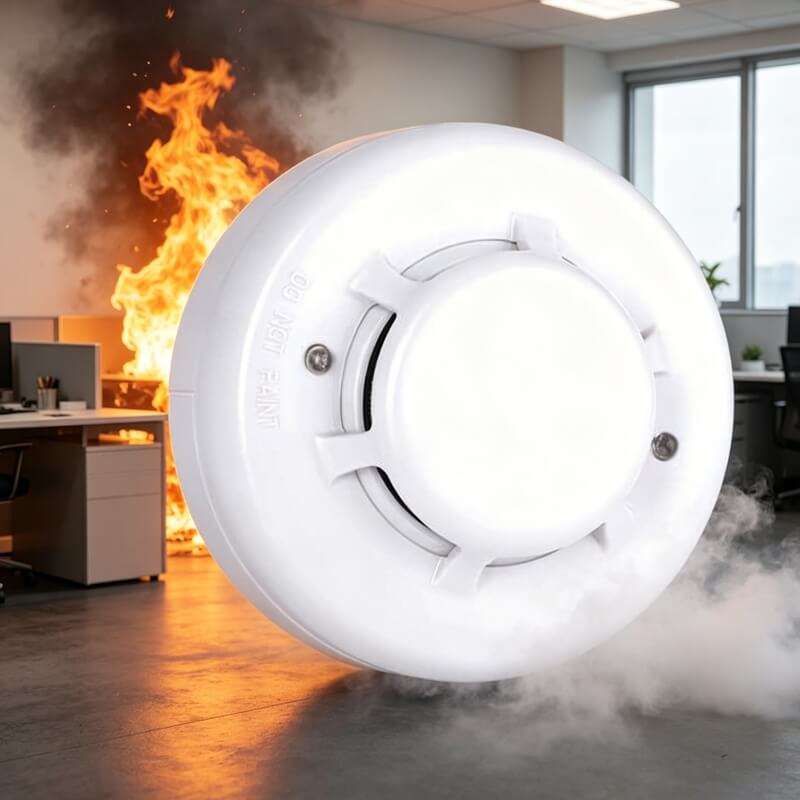 How Do Fire Smoke Alarms Work? A Complete Guide to Types, Pros & Usage Tips
Do you like ?0
Read more -
 Fire Smoke Alarm: Guide to Installation & Maintenance for Home Fire Safety
Do you like ?0
Read more -
 Why You Need a Smoke and Carbon Monoxide Combo Detector in Your Home ?
Do you like ?0
Read more -
 Can an Independent Smoke Detector Work in Extreme Heat? A Safety Guide
Do you like ?0
Read more
Search
Hot Product