Does Smoke & CO Alarm Reactivate Instantly When Hazards Spike In Hush Mode?
Why Every Overseas Buyer Fixates On This Single Hush Feature Question
If you’ve spoken to residential property clients, rental chain managers, or home safety retailers across Europe, North America, and Australia, you’ve heard this exact question a hundred times. It’s not a trivial detail—this one function can make or break a customer’s trust in a combined smoke and carbon monoxide alarm.
Think about the real-life scenario your end users face: someone burns toast on the stove, the alarm blares loud enough to wake the whole house. They tap the hush button to quiet the false alert, and walk back to their kitchen. What happens if, ten minutes later, that burnt food sparks actual smoke buildup? Or a faulty gas heater starts leaking carbon monoxide while the detector sits in silent hush mode?
That’s the core fear driving every buyer’s inquiry. End users hate loud false alarms, but they refuse to trade temporary silence for life-threatening blind spots. As a bulk importer, you need to fully understand how quality dual-sensor alarms handle hush-mode hazard spikes—so you can answer every client’s follow-up with confidence.
Do you know how cheap, low-end composite detectors fail this critical safety test? Many budget units lock out all alerts for the full hush timer window, no matter how toxic the air becomes. That’s a massive liability for your business, and a nightmare for household safety compliance.
How Proper Hush Mode Works On Dual Smoke & CO Combination Detectors
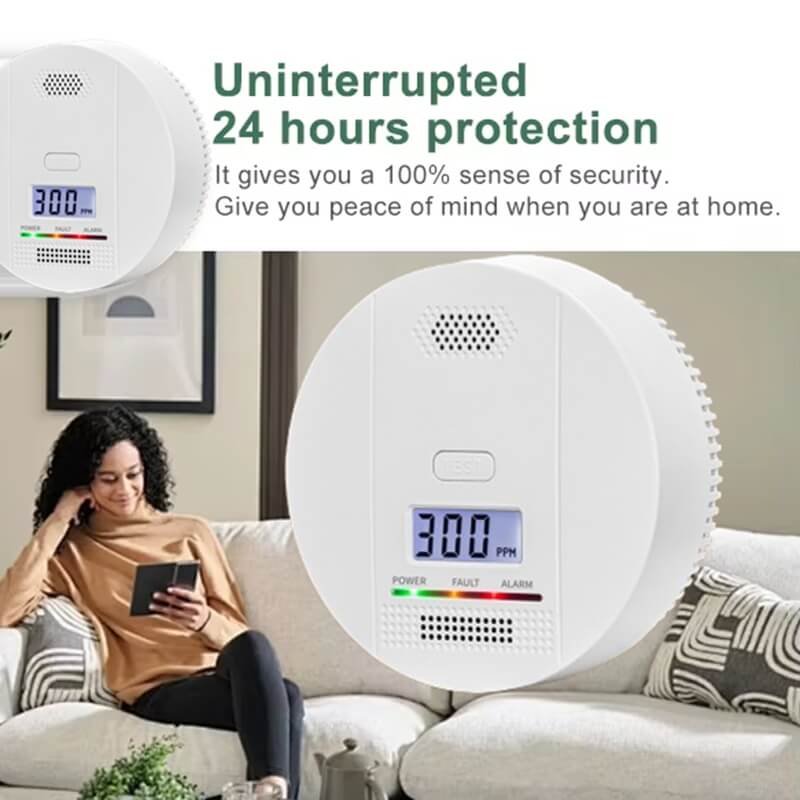
Let’s break down the standard safe hush logic, using the dual-sensor design shown in our SR-821THS unit as a clear reference.
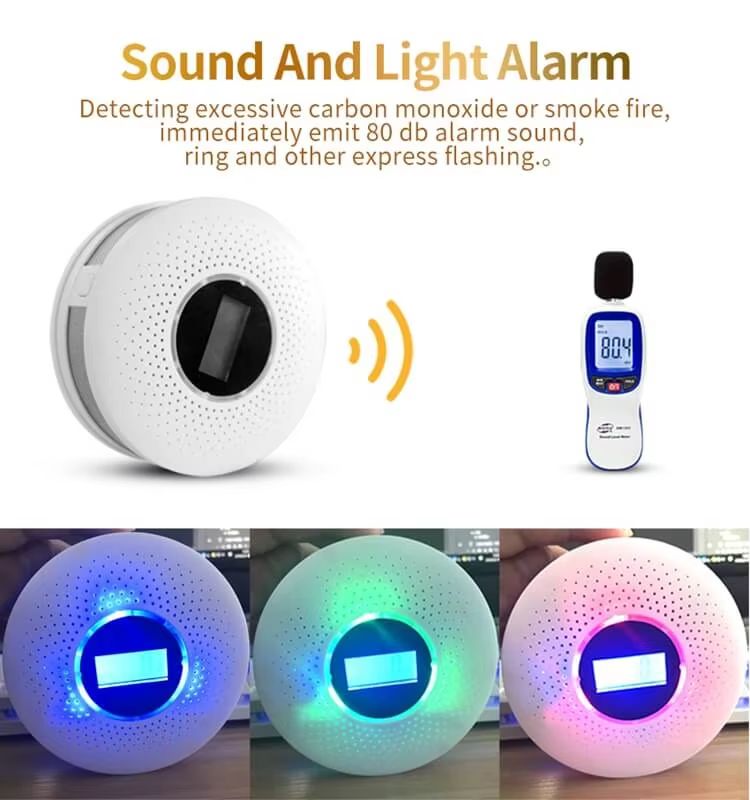
This 2-in-1 alarm packs two separate detection systems: an electrochemical CO sensor for toxic gas tracking, and a photoelectric infrared sensor for slow-burning smoke from furniture, fabrics, or smoldering food. The hush button only mutes the active alert sound and LED flash for a preset window—usually 8–10 minutes—but it never shuts down continuous sensor monitoring.
Here’s the critical rule buyers care about most: If either sensor picks up smoke density or CO ppm values that cross the official safety threshold at any point during hush, the full 80dB sound-and-light alarm restarts right away, zero delay. No waiting for the hush timer to finish. No partial muted beeps. Full emergency activation instantly.
You might ask—what counts as a dangerous spike that overrides hush?
- Smoke: Density hits 0.1%/m or higher, matching the unit’s listed smoke sensitivity range of 0.1–9.9% db/m
- Carbon monoxide: Concentrations climb past 50 PPM, the standard trigger limit for residential CO poisoning warnings
Even tiny, gradual rises that creep over the safety line will cancel silent mode. The screen on the front of the detector also refreshes live CO PPM numbers through the entire hush period, so anyone glancing at the unit can spot rising gas levels before the alarm sounds again. That digital display is a small add-on, but it’s a huge selling point for your retail listings.
What Happens When Hush Can’t Be Overridden? Real-World Risk Examples
Let’s paint a relatable picture for your end customers to highlight why this feature matters so much.
Case one: A family fries bacon, grease smoke triggers the alarm. The homeowner hits hush, and turns down the stove heat. Mid-hush, the pan catches light flame, thick smoke surges into the air. Cheap detectors stay silent until the hush timer expires—giving the fire minutes to spread. Quality combination alarms cut hush short and blast full alert tones the second smoke crosses the danger line.
Case two: Winter heating season, a blocked furnace vent slowly leaks CO overnight. A resident silences a minor low-level CO alert before bed, thinking it’s a false trigger. If the unit can’t override hush, lethal CO builds while the household sleeps. Proper dual-sensor models reset the alarm instantly as gas levels climb past safe limits, no exceptions.
Regulatory bodies across the US and EU flag this exact flaw in non-compliant detectors. Units that block hazard alerts during hush cannot pass EN 14604, EN 50291, or UL 217 certification—documents every overseas buyer needs to clear customs and meet local building codes. If the alarms you source fail this hush override test, you face rejected shipments, costly re-testing fees, and lost distributor partnerships.
Extra Hush Function Details Your Clients Will Ask You Next
Most buyers don’t stop at the core reactivation question. They follow up with layered functional questions tied directly to the hush feature, all tied to the SR-821THS design specs:
- How long does hush mode last before auto-resetting? This model holds silent for 8 minutes flat, then automatically resumes full monitoring alerts if no hazard is present. The countdown runs even if you press the test button mid-hush.
- Can users silence low-battery chirps with the same hush button? Yes, the single test/hush button doubles as a temporary mute for low-power reminder beeps. This mute only lasts 24 hours, to stop users from ignoring dying batteries long-term.
- Is hush disabled during extreme hazard levels? When CO hits 200 PPM or smoke density reaches the top end of the sensitivity scale, the hush button locks entirely. Users cannot mute the emergency alert—this prevents people from ignoring severe life-threatening conditions.
- Does the multi-color status LED shift during hush and reactivation? The unit cycles soft blue standby light during quiet hush. If a hazard triggers reactivation, the ring instantly switches to fast-flashing red paired with the 80dB loudspeaker, easy to spot in dark bedrooms or hallways.
All these small, linked functions wrap around the core safety promise: hush is only for minor false alerts, never a permanent off-switch for fire or toxic gas warnings.
Other Core Functional Specs To Pair With Hush Safety When Pitching To Buyers
While the hush override question tops every inquiry list, savvy importers cross-reference it with other key product features to build a complete sales pitch for their clients. Pull these specs from the SR-821THS datasheet to back up your answers:
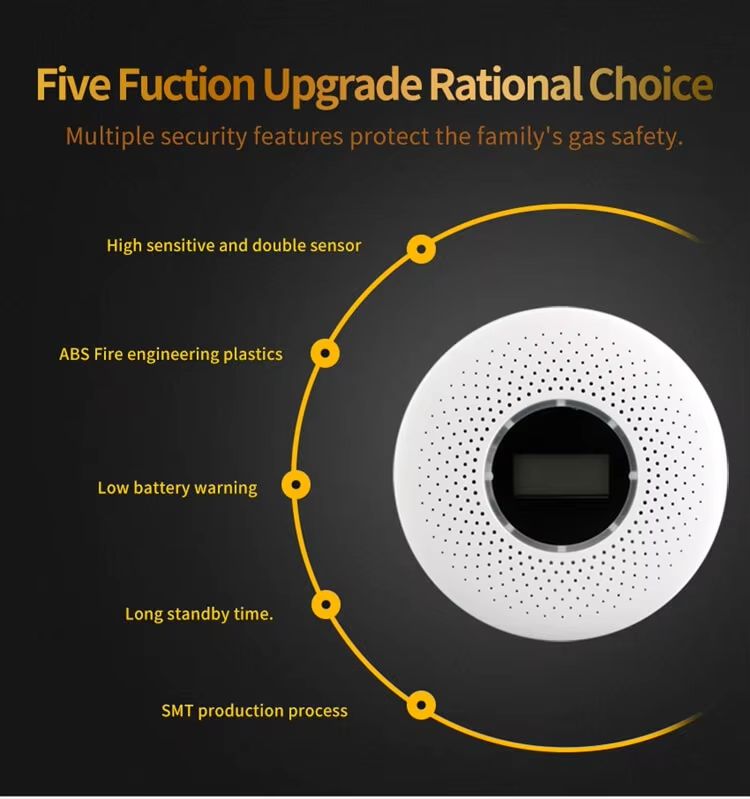
- Dual independent sensors: Electrochemical CO sensor + infrared photoelectric smoke sensor, low sensitivity drift for long-term stable readings
- Digital LCD display: Constant real-time CO PPM readout, stores peak gas value after an alarm event
- Full sound-light alert system: Consistent 80dB output, loud enough to reach upstairs bedrooms; multi-color LED ring for clear status differentiation
- Low power draw: Under 80uA quiescent current, runs on 3 AA batteries for multi-year standby life with low-battery warning chirps
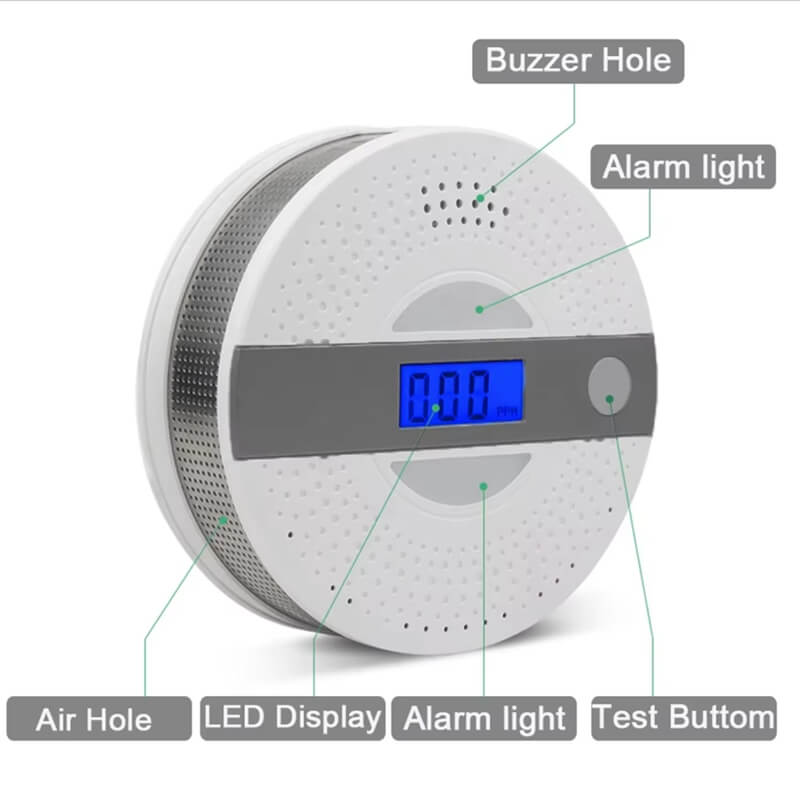
- Durable ABS fire-grade plastic casing, full perforated air intake holes for fast air sampling, easy one-button manual self-test
Every one of these features reinforces the hush function’s safety value. A sensor with heavy drift, for example, might trigger constant false alarms that make users over-rely on hush mode—so stable dual sensing cuts down unnecessary silences in the first place.
Frequently Asked Questions From Global Wholesale Buyers
- Q: Will the combination smoke CO alarm reactivate instantly if CO or smoke spikes while hush is active? A: Yes. The SR-821THS dual-sensor detector pauses alerts only for minor false triggers; any rise past official safety thresholds immediately cancels hush and restores full 80dB sound and flashing red light alerts without delay.
- Q: Can I market this alarm to EU rental property clients under EN certification rules? A: It meets core EN 14604 smoke and EN 50291 CO standards, including mandatory hush override safety requirements, so it qualifies for European residential rental installations.
- Q: Does the hush button double as a manual self-test button? A: Exactly—one single front button handles both unit self-test and temporary hush mute, simplifying the product design for end users.
- Q: If both smoke and CO hazards appear during hush, will the alarm distinguish both risks? A: It uses separate beep patterns and LED color flashes to tell smoke fires apart from carbon monoxide leaks, even when both hazards activate at once after hush override.
- Q: Is the low-battery reminder chirp also able to be muted via hush mode? A: The hush button silences low-power alerts for 24 hours max, to stop nightly annoying chirps without letting users ignore dead batteries indefinitely.
Closing Thought: Where To Source A Fully Compliant Dual Detector With Reliable Hush Safety
Every wholesale buyer’s biggest worry is landing a product that cuts corners on life-saving safety features like hush-mode hazard reactivation. Cheap generic detectors skip this critical override logic to save production costs, leaving your end customers exposed to unnecessary danger—and your business open to compliance headaches.
If you’re searching for a factory-direct composite smoke and carbon monoxide alarm built with strict safety standards, stable dual sensors, and fully functional hush override technology that answers every client’s safety questions clearly, take a closer look at the complete product lineup from Sumring. Their SR-821THS model checks every box global importers demand for residential safety sales across all major markets.
Latest posts
-
 Why You Need a Smoke and Carbon Monoxide Combo Detector in Your Home ?
Do you like ?0
Read more -
 Why a Combination Smoke and Carbon Monoxide Alarm Is Essential (With Real Exampl
Do you like ?0
Read more -
 The Night a Combined Carbon Monoxide & Smoke Detector Alarm Saved Sarah’s Family
Do you like ?0
Read more -
 The Silent Guardian: Why Every Home Needs a Carbon Monoxide Detector
Do you like ?0
Read more -
 Carbon Monoxide Detectors: Why They’re Non-Negotiable for Home Safety
Do you like ?0
Read more -
 The Night a Carbon Monoxide Detector Saved the Carter Family’s Lives
Do you like ?0
Read more
Search
Hot Product